Tuning In Before Tuning Up: How Americana Artists Use the Radio Dial to Read a Town's Soul
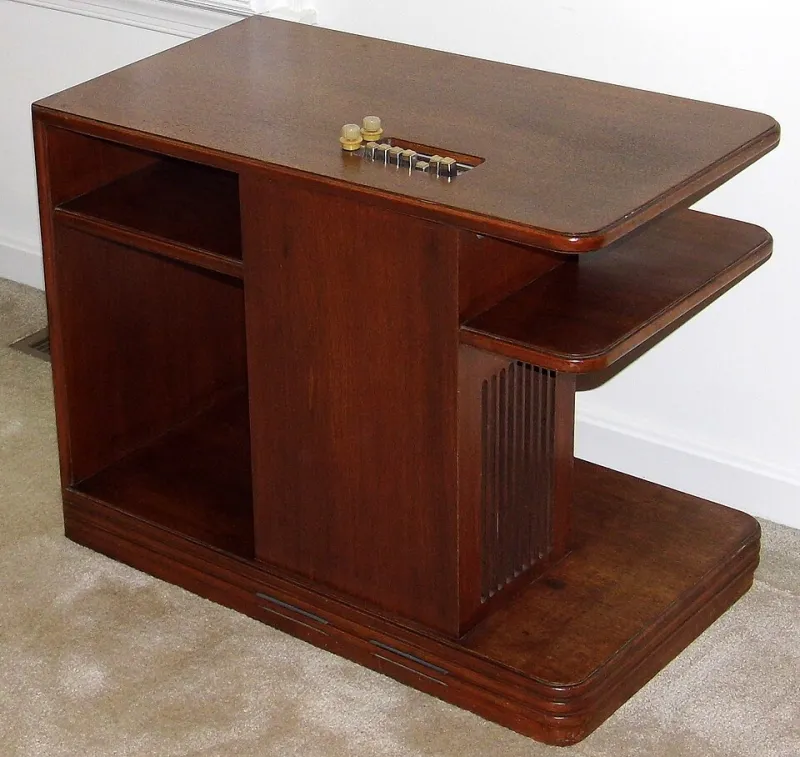
Photo: Joe Haupt from USA, CC BY-SA 2.0, via Wikimedia Commons
There's a ritual that happens in a lot of touring vans somewhere between the last truck stop and the next venue. The GPS is still running, the coffee's gone cold, and somebody reaches over and hits the scan button on the radio. Not to find something good, necessarily. To find something true.
For a certain breed of Americana artist, local radio isn't background noise. It's a briefing.
"I started doing it almost by accident," says singer-songwriter Della Crane, who's been working the roots circuit through the South and lower Midwest for going on eight years. "We pulled into this small town in eastern Tennessee, and I caught about forty seconds of a steel guitar solo on some AM station before it cut to a farm report. I didn't even catch the song title. But I spent the next two hours asking people at the diner if they knew it. Turned out it was a regional session player from the sixties nobody outside the county really remembered. I opened my set that night with a song in that same tuning. The room just opened up."
That's not a fluke. That's a method.
The Airwaves as Oral History
Local radio — especially the community stations, the low-power FM outfits, the college broadcasts, and the old AM holdouts — functions as something that doesn't get enough credit: an unofficial, living archive of regional musical identity. The playlists aren't curated by algorithm. They're curated by people who grew up in the same zip code as their listeners, people who still remember which local band packed the county fair in 1987 and which gospel choir cut a record in someone's garage.
For an outsider rolling into town, that signal is basically a cultural decoder ring.
Multi-instrumentalist and touring veteran James Pruett puts it plainly: "Before I play anywhere new, I try to spend at least an hour with whatever's on the local dial. You start hearing patterns. Is there a lot of honky-tonk? Old-school country? Gospel underpinning everything? Are they playing bluegrass next to classic rock? That tells you something about how people in that town relate to music emotionally. It tells you what they grew up hearing at their grandparents' houses."
Pruett has a habit of noting artist names he doesn't recognize — the ones that get played with obvious familiarity by the DJ, the ones that draw caller requests. Those names become his research project. Sometimes they lead him to forgotten regional legends. Sometimes they lead him to living musicians he ends up collaborating with. Either way, he says, they almost always lead him to a better show.
What the Dial Reveals That Google Can't
There's a real limit to what you can learn about a place from the internet. You can get the demographics, the Wikipedia entry, maybe a few Yelp reviews. What you can't get is the feeling of the place — the specific emotional texture that only comes from living there.
Local radio carries that texture.
"I played a town in the Texas Panhandle a few years back," recalls Crane. "I'd done my usual research — looked up the history, read about the economy, the usual. But when I hit the radio that morning, I heard this whole cluster of songs about drought. Not metaphorical drought. Actual, literal songs about crops and water and land dying. I hadn't thought about how present that was for people there. I pulled a song from my back catalog that I hadn't played in two years — something I wrote after a bad season on my uncle's farm. It was the most connected I've felt to an audience in a long time."
That kind of resonance doesn't happen by accident. It happens because she listened first.
The Forgotten Regional Heroes
One of the most consistent things touring musicians mention when they talk about local radio is the discovery factor — stumbling onto names and sounds that never made it past the state line but meant everything to the people who grew up with them.
"Every region has its own constellation of artists that the rest of the country just doesn't know," says Pruett. "You hear a name on a community station in rural Louisiana, and you start asking around, and you find out this person played every dance hall in the parish for thirty years and wrote songs that people still sing at funerals. That's not obscure. That's essential. It's just essential to a specific place."
Discovering those artists changes how musicians perform. It changes what they reference in their stage patter. It changes which songs they choose to cover, or which riffs they work into their own originals. It's a form of respect — and audiences notice.
"When you namecheck someone local, someone real, someone the crowd actually knows and loves," Crane says, "you're telling them you did the work. You're telling them you care about where they come from. That matters."
Building the Set Around the Signal
The practical application of all this radio research shows up most clearly in setlist construction. Some artists treat their setlists like fixed documents — same order, every night, town after town. Others treat them like conversations that haven't started yet.
The musicians who use radio as a cultural compass tend to fall firmly in the second camp.
"I'll have a loose framework going in," says Pruett, "but I keep the first two or three slots genuinely open until I've had a chance to tune in and talk to a few locals. Sometimes that means I'm rewriting my opener in the parking lot twenty minutes before doors. But those are usually the best nights."
Crane agrees, though she adds a caveat: "You have to be careful not to perform at a place rather than for it. There's a version of this that becomes condescending — like you're doing an impression of the town's music rather than actually engaging with it. The radio research is a starting point for a conversation, not a script."
The Road as a Listening Device
There's something quietly profound about the image of a musician parked on the edge of an unfamiliar town, scanning through static and snippets of someone else's musical world. It runs counter to the performance-ready, brand-polished version of the touring artist that social media tends to promote. It's humble work. Patient work.
But it's the kind of work that turns a gig into something people talk about for years.
The road has always been part of the Americana story — the miles, the motion, the endless American geography sliding past the window. What doesn't get talked about enough is the listening that happens along the way. The quiet act of tuning in before you tune up. Of letting a place speak before you ask it to sing along.
Some of the best sets ever played in small towns across this country started not with a guitar in hand, but with a hand on the radio dial, turning slowly through the static, looking for the sound of somewhere.