Named by the Mile: How Highway Numbers Became the Backbone of America's Best Road Songs
Photo: Unknown authorUnknown author or not provided, Public domain, via Wikimedia Commons
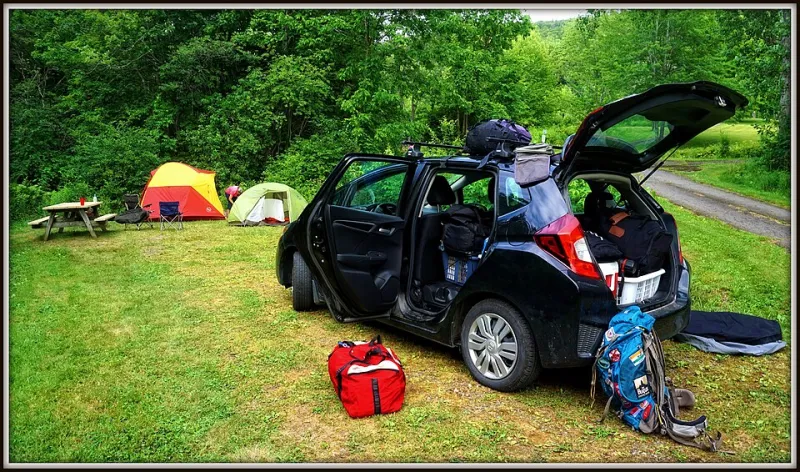
There's a moment most touring musicians know well. You're somewhere on a dark stretch of two-lane blacktop, the GPS says you've got four more hours, and something about the rhythm of the road starts knocking against the rhythm in your head. You don't name the feeling right away. But later, when you're trying to title the song, you look down at the highway sign you just passed and think — yeah, that's it. That number says everything.
It's a phenomenon as old as American popular music itself, and it's quietly shaping the way contemporary folk and Americana artists build their catalogs. Highway numbers aren't just logistical markers. For a certain kind of songwriter, they're emotional coordinates.
The Number as a Vessel
Ask any songwriter why they'd name a song after a route number rather than a town or a feeling, and you'll usually get some version of the same answer: the number carries the whole trip inside it.
"A town name is specific to a place," says Marta Hollins, a Nashville-based folk artist who spent three years touring the Southeast on what she calls her "Highway 11 circuit" — a loose path running from New Orleans up through Mississippi, Tennessee, and into Virginia. "But a route number holds the whole road. Every curve, every grain elevator you passed, every diner you stopped at at six in the morning. When I write '11,' I'm not writing about one place. I'm writing about the whole experience of moving."
Hollins released a six-song EP last year built entirely around roads she traveled during that stretch. The title track, simply called Eleven, opens with a chord progression she says she lifted directly from the rhythm of her truck hitting the expansion joints on a particular stretch of asphalt in northern Mississippi. "That bump-bump-pause, bump-bump-pause — that became the verse rhythm. The highway wrote the time signature."
She's not alone in thinking this way.
Geography as Co-Writer
The idea that physical landscape shapes musical structure isn't new — folk scholars have argued for decades that the wide-open spaces of the American West produced longer, more expansive melodic lines, while the compressed geography of Appalachian hollers gave birth to tighter, more intricate picking patterns. But what's interesting about the highway-number phenomenon is how deliberately contemporary artists are leaning into it.
Tucson-based singer-songwriter Del Rios (a stage name he's kept for fifteen years of touring) has made a practice of what he calls "road mapping" — literally plotting his touring routes on paper before a run and identifying which stretches he expects to produce material.
"I-10 through West Texas is a different song than I-10 through Louisiana," he explains. "Same interstate number, completely different emotional register. West Texas is all that flat, relentless distance — songs that come out of there tend to be stripped down, kind of ruthless. Louisiana starts throwing curves and humidity and Spanish moss at you, and suddenly you're writing something that feels almost humid itself. The geography gets into the melody whether you want it to or not."
Del Rios has an entire notebook he calls his "route journal" — entries logged by highway number, noting weather, time of day, what was on the radio, what the land looked like. He revisits it between tours the way some writers revisit old journals. Several of his most-streamed songs trace directly back to specific entries.
Why Numbers Stick
There's something about the abstraction of a number that gives songwriters room to work. A title like Memphis or Bakersfield arrives with a whole set of cultural baggage — musical traditions, famous predecessors, audience expectations. But Route 9 or Highway 50 lands differently. It's specific enough to feel real, but open enough to hold whatever the writer brings to it.
"Numbers don't have genre," says Appalachian folk artist Cecily Brandt, who grew up in West Virginia and has spent the better part of a decade touring the mid-Atlantic on a circuit that traces portions of US-33 and US-219. "They don't belong to any one kind of music. So when I write a song called '219,' I'm not competing with anybody. I'm just telling you where I was."
Brandt's approach to writing on the road is almost documentary. She keeps a voice memo app running during long drives and reviews the recordings later, listening not just to the lyrical fragments she captures but to the background sounds — wind noise, the engine note changing on a grade, the doppler shift of a passing truck. "I'll build a melody around the sound of the road itself," she says. "The pitch of the wind through a cracked window at sixty miles an hour on a mountain highway is different from the same window on a flatland interstate. That pitch difference ends up in the song."
The Interstate vs. The Blue Highway
Not all roads are created equal in this tradition, and most of the artists we spoke with draw a sharp distinction between the big interstates and the older numbered US highways — the so-called "blue highways" that predate the Interstate System and still carry much of America's back-road character.
"Interstates are efficient," says Del Rios. "Blue highways are honest. There's a reason more songs come out of Route 66 than I-40, even though they run basically the same corridor. The older road has a personality. It goes through towns instead of around them. It has opinions."
That personality, artists argue, translates directly into songwriting texture. The older routes force slower travel, more stops, more contact with the specific character of individual places. And that specificity — a particular barbecue joint in a particular small town, a particular bend where the road drops suddenly toward a river valley — is the raw material of the best road songs.
The Album as Atlas
Some artists have taken the concept even further, building entire album structures around the geography of a single route. The idea is essentially cartographic: side one might cover the southern stretch, side two the northern, with the emotional arc of the record mirroring the actual journey.
Hollins is currently working on a full-length record organized this way, tracking a highway she drove last fall from the Gulf Coast to the Canadian border. "I want the listener to feel like they're taking the trip," she says. "The songs get colder as the record goes on. The landscapes get bigger. The tempos slow down because you're tired and you've been driving for days. By the end, you're somewhere you didn't expect to be."
It's a concept that would have made perfect sense to the songwriters who first put Route 66 on a map of American music — the idea that the road doesn't just carry you somewhere, it changes you on the way. The highway number is just the address where that transformation lives.
And somewhere out there tonight, another songwriter is crossing another state line, watching another sign flash past in the headlights, and reaching for a pen.