Trunk Space and Turntables: The Touring Musicians Hauling America's Musical Memory Across the Country
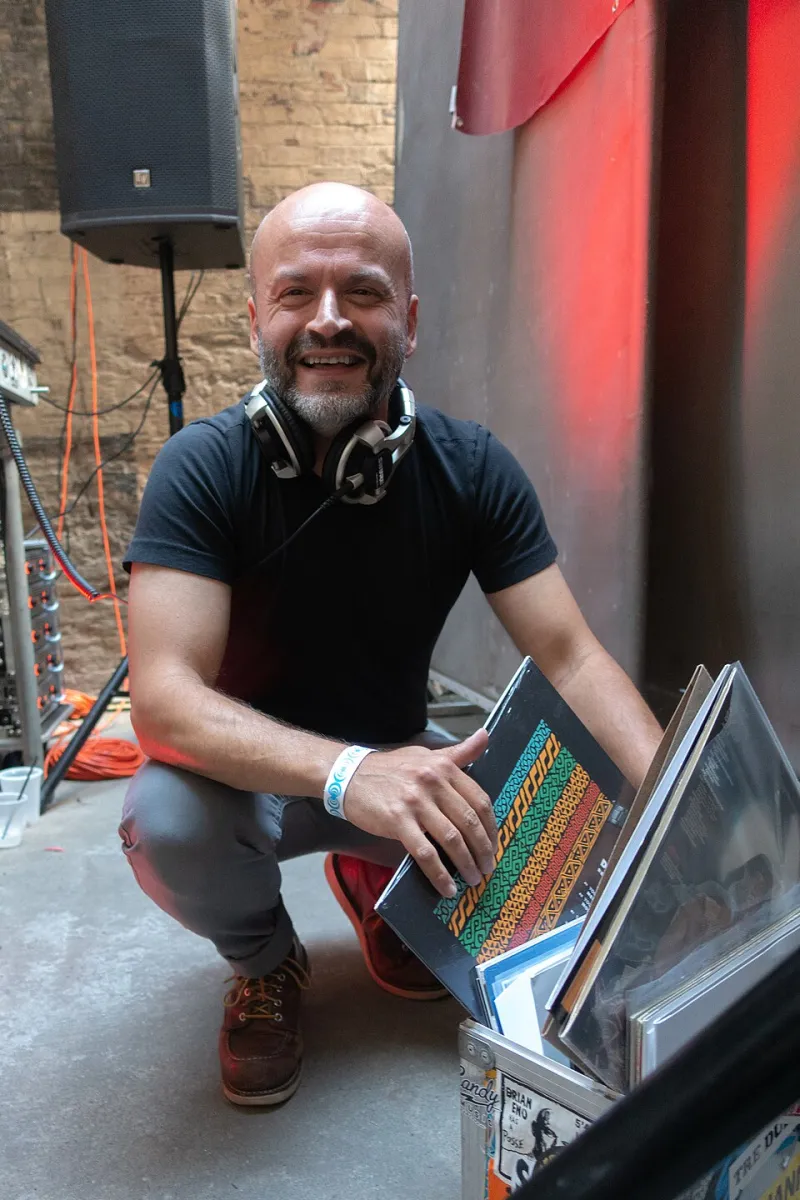
Photo: Deckblad, CC BY-SA 4.0, via Wikimedia Commons
There's a particular kind of weight that accumulates on a long tour. Not just the road fatigue or the stiff back from a lumpy venue couch — but the physical, literal weight of records. Stacks of them. Milk crates wedged between guitar cases, cardboard sleeves soft from handling, labels worn down to near-illegibility. For a certain breed of touring Americana and folk musician, this is just part of the load.
They're not collectors in the traditional sense — no climate-controlled rooms, no insurance riders, no spreadsheets tracking mint-condition pressings. These are road people first, and their collections reflect that. Every record has a zip code attached to it, a story about the town they were passing through, the shop owner who pointed them toward the right bin, the estate sale off a county road where somebody's grandmother had kept a stack of 45s since 1963.
The Crate Comes Along for the Ride
Ask any of these musicians why they haul records on tour and you'll get a version of the same answer: they can't not do it. The road creates a kind of gravitational pull toward record shops, flea markets, and church rummage sales. When you're spending three weeks zigzagging across the country, playing listening rooms and roadhouses and converted barns, you start to develop a sixth sense for where the good stuff lives.
Some artists have turned this into something close to a research practice. Between soundchecks and set times, they're flipping through bins looking for regional releases — the kind of small-label country, gospel, and blues records that never made it to a streaming platform and never will. Local pressing plants from the 1950s through the 1980s cranked out thousands of records that documented hyper-specific regional sounds: the Cajun dance halls of southwest Louisiana, the honky-tonk strips of Bakersfield, the shape-note singing traditions of Appalachian churches. These records don't show up on algorithms. You have to go find them.
One fiddle player who tours the upper Midwest described it this way: "I've got a crate that I think of as the Minnesota-Wisconsin corridor. Every record in it came from a shop or a sale between Minneapolis and Milwaukee. When I pull one out and put it on, I'm back on that stretch of highway. It's like a map you can listen to."
What the Records Actually Do
This isn't just nostalgia for its own sake. These collections are working documents. Musicians talk about pulling out a record from a specific region before a show there — not to copy what they hear, but to get oriented. To understand what the land sounds like when it sings. The way a Texas swing record from the 1940s carries a particular looseness in the rhythm section that you don't hear anywhere else. The way an old Appalachian ballad recording preserves a tuning and a phrasing that predates anything you'd call a commercial music industry.
For songwriters especially, these records function as conversation partners. You sit with a scratchy pressing of some forgotten regional artist and you start to hear the architecture underneath — the chord choices that made sense in that geography, the lyrical subjects that mattered to those particular people in that particular time. It feeds into your own writing in ways that are hard to trace directly but feel deeply real.
A guitarist who tours the South regularly keeps what she calls her "Delta shelf" — a rotating selection of blues and gospel records she pulls from shops between Memphis and the Gulf Coast. "I don't sample them or anything like that," she said. "But they're in my hands before I go onstage. That matters. You absorb things."
The Hunt Is Part of the Tour
What makes this different from simply being a record collector is the geography of it. These collections are assembled in motion. Every stop on the tour is also a potential acquisition point, and serious vinyl-hunting musicians will plan their routes with record shops in mind the same way they'd plan around a good diner or a cheap motel.
Small-town record shops are especially valuable in this context. They tend to stock the regional stuff that bigger city shops have already picked clean. An independent shop in a mid-sized Southern town might still have a back room full of local gospel quartets and regional country artists that nobody's bothered to price up because nobody's come looking. Until now.
These musicians become informal documentarians in the process. Some photograph the labels of records they can't carry. Others keep handwritten notes about what they found and where. A few have started sharing their finds online, posting images of obscure pressings with the town and shop name attached — a kind of crowdsourced map of where America's forgotten music still lives in physical form.
The Weight of the Archive
There's a practical tension at the heart of all this, and the musicians who do it will tell you about it honestly. Records are heavy. Vans have limited space. At some point, every tour reaches a moment where the crates have to be edited — something comes out to make room for something new. These aren't carefully managed collections with acquisition policies. They're living, breathing accumulations shaped by opportunity and instinct.
Some musicians have started leaving records behind intentionally — gifting them to local shops, trading with other touring artists, donating to community radio stations in small towns that still spin vinyl on air. The collection moves through the world as much as it travels with the artist. That feels right to a lot of them. The music came from the road. It makes sense that it keeps moving.
What persists is the knowledge — the internalized geography of American sound that builds up over years of digging. You start to understand this country differently when you've held its music in your hands, town by town, pressing by pressing. The road connects the dots in ways that no streaming service ever will.
Where the Road and the Record Meet
There's something that feels essentially American about all of this — the combination of restlessness and preservation, the impulse to keep moving while also holding on to what came before. These musician-collectors aren't trying to build museums. They're trying to stay in conversation with the traditions they're working inside of, and they've figured out that the best way to do that is to go find the evidence wherever it lives.
The next time you see a roots musician loading out after a show and you notice the crates going into the van alongside the gear, that's what you're looking at. Not just a record collection. A road map. An archive. A set of ongoing conversations with the musicians who played these same towns and highways before any of us were around to hear them.