Off the Beaten Interstate: The Folk Artists Putting Forgotten Towns Back on the Musical Map
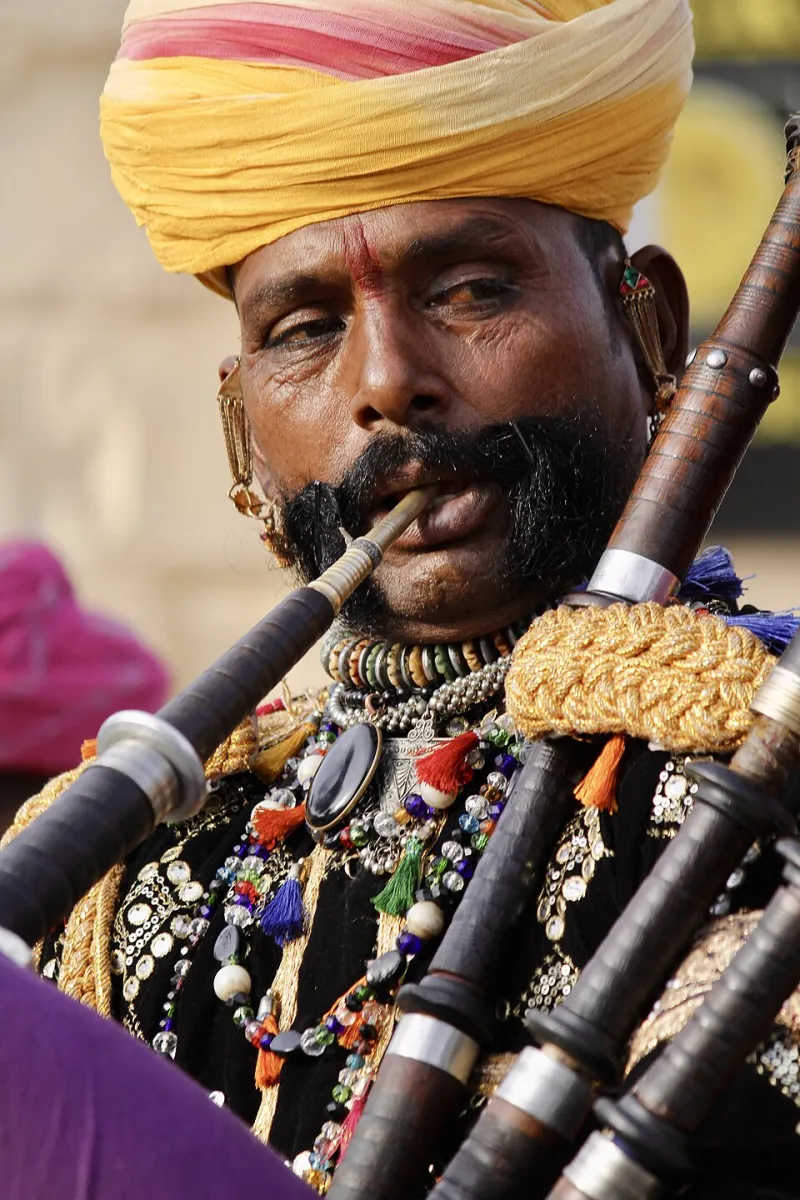
Photo: Prithvipalsinghrathore, CC BY 4.0, via Wikimedia Commons
There's a particular kind of silence that settles over a small town when the music stops coming. Not a peaceful quiet — more like the hush of something missing. A lot of rural communities across the American interior know that feeling intimately. The last touring act rolled through maybe a decade ago, the old venue converted into a feed store or a church annex, and somewhere along the way, the town just got written out of the routing spreadsheets that dictate where live music happens in this country.
But something's shifting out there on the back roads. A loose, uncoordinated movement of folk, Americana, and roots musicians has started deliberately steering toward the towns that everyone else steers around. They're not doing it for the money — the guarantees are modest at best. They're doing it because those towns still have people in them, people who remember what a room full of live music feels like, and who turn out in numbers that would surprise you.
Rerouting by Choice
Ask any mid-level touring artist about their routing process and you'll usually hear some variation of the same story: you play the markets that make financial sense, you string together cities that are roughly a tank of gas apart, and you hope the math works out. It's a formula that has served the industry for decades, but it also means that hundreds of American communities — places with real populations, real histories, and real hunger for live entertainment — never make the cut.
Singer-songwriter Maya Caldwell, who tours the South and Midwest out of a retrofitted cargo van, started questioning that formula a few years back after a blown tire forced an unplanned overnight in a tiny county seat in western Kentucky. "I ended up playing the back room of a hardware store because the owner heard me warming up in the parking lot," she says. "Forty people showed up on two hours' notice. Forty people in a hardware store. I made more in the tip jar than I had at a proper venue two nights before."
That accidental gig rewired something in her thinking. She started building tours differently — identifying rural communities with populations between 1,500 and 8,000, cross-referencing them against county fair schedules, local Facebook groups, and community center calendars, then reaching out cold to see if anyone wanted a show. More often than not, someone did.
The New Toolkit for Finding an Audience Anywhere
What makes this kind of touring viable now in a way it wasn't twenty years ago is a combination of technology and social infrastructure that didn't exist before. GPS navigation means artists can confidently route through places that don't appear on any standard touring map. Instagram and TikTok let a musician build a following in a town they've never visited, so by the time they show up, there's already a small community of people who feel like they know the music.
But the most powerful tool, according to most of the artists doing this, is still the human network. Local librarians, high school music teachers, diner owners, pastors, volunteer fire department coordinators — these are the people who know how to get the word out in a community that doesn't have a promoter or a music blog. "I've had a librarian in rural Nebraska fill a community room with sixty people just by putting up a flyer and making a few phone calls," says touring guitarist Deke Harmon. "That's a promoter. She just doesn't have that title."
Harmon has spent the better part of three years building what he calls his "back-forty circuit" — a loose string of small-town stops across Nebraska, Kansas, Missouri, and Iowa that he revisits every twelve to eighteen months. Some stops have grown from ten-person living room shows into proper community events. One town in central Kansas started an annual music weekend after his first visit, anchoring it around the idea that original Americana music belonged in their community just as much as it belonged in Kansas City.
What It Means to the Towns
The impact on these communities is harder to quantify than ticket sales, but the people who live in them will tell you it's real. In a small river town in southern Illinois, a monthly music series that began when a touring duo asked if they could play the local diner has since grown into a reliable draw that pulls people from three surrounding counties. The diner owner, who asked to remain anonymous because she's still a little stunned by the whole thing, says Friday nights are now her best revenue night of the month.
"We'd kind of stopped expecting things to happen here," she admits. "You get used to driving an hour to find anything interesting. And then all of a sudden there's something interesting right here, and people remember that this is a place worth being."
That shift in community self-perception is something multiple residents in multiple towns describe in almost identical terms. Live music, even a single touring artist with an acoustic guitar, signals that a place is worth showing up to. It's a subtle thing, but it compounds. Local businesses see foot traffic they haven't seen in years. Young people who might otherwise spend the evening scrolling their phones end up in conversation with their neighbors. Older residents dig out stories about the last time music came through town.
The Road as Research
Many of the artists doing this work describe it in terms that go beyond touring logistics. They talk about it as a form of listening — pulling into a new community, paying attention to what the landscape and the people are telling them, and letting that inform the music they make. More than a few have written songs directly inspired by conversations in these overlooked towns. The road, in other words, is still doing what it always did for American roots music: feeding it.
"There's this idea that the authentic American story only lives in certain places — Nashville, Appalachia, the Delta," says Caldwell. "But I've heard just as much truth in a grain elevator in eastern Colorado or a Legion hall in rural Minnesota. The story's everywhere. You just have to be willing to take the exit."
The towns are out there, quiet and waiting. And the musicians who are willing to leave the interstate are finding, more often than not, that someone left the light on.