Crate Digging and Chord Strumming: The New Wave of Record Shop Performances Keeping Roots Music Alive
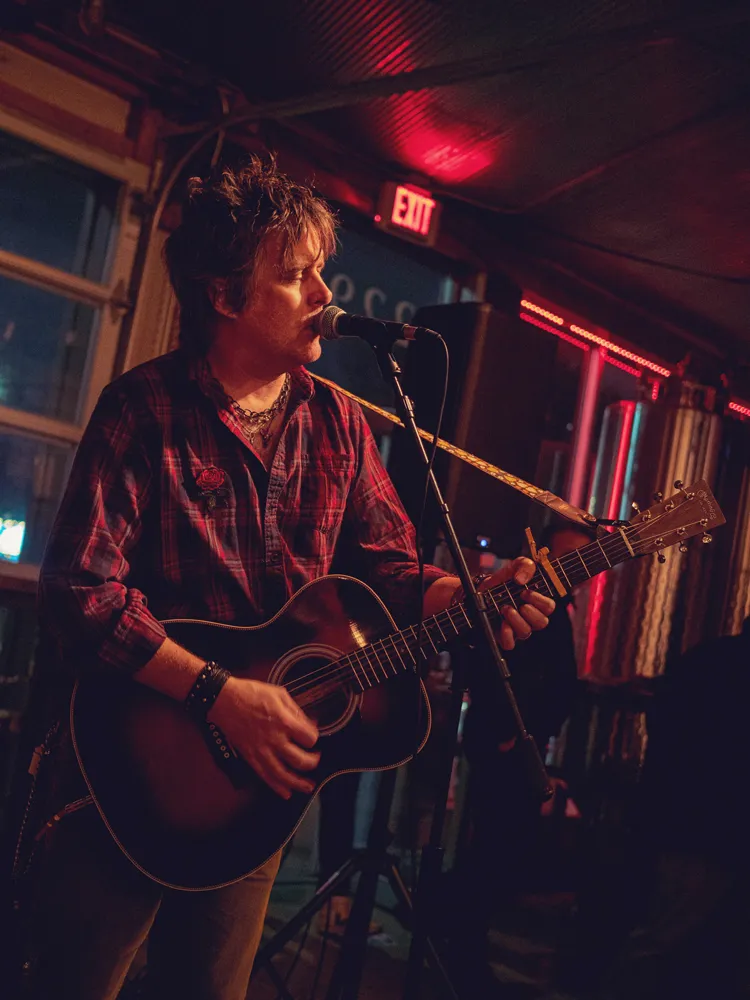
Photo: Jonny.beatnik.detroit, CC BY-SA 4.0, via Wikimedia Commons
There's something almost poetic about a singer-songwriter setting up a microphone between the Folk/Americana bin and a spinning rack of used jazz records. No stage lights. No bouncer at the door. Just a guitar, a handful of curious listeners, and the faint smell of old cardboard sleeves. Across the country, that scene is playing out more and more often — and it's reshaping the way roots artists think about touring.
The record store performance isn't exactly a new invention. Artists have been doing in-store appearances for decades, usually tied to a big album release and a major label push. But what's happening right now feels different. Independent Americana and folk musicians are actively building entire touring routes around record shops, treating them less like promotional pit stops and more like the main event. It's a shift worth paying attention to.
Why the Record Shop Makes Sense for Roots Music
Think about who walks into an independent record store on a Tuesday afternoon. They're not casual listeners who stumbled onto a Spotify playlist. They're people who drove across town to flip through physical copies of albums, who have opinions about pressing quality and liner notes, who can tell you exactly where they were the first time they heard a particular record. That's the audience a folk or Americana artist dreams about.
"You're not playing to a room full of people waiting for the bar to open," one touring songwriter put it recently at an in-store event in Asheville, North Carolina. "Everyone in here actually wants to be here. They came for the music."
That kind of intentional audience is increasingly rare in live music. And for artists working in genres that thrive on intimacy and storytelling, it changes everything about the performance itself. Songs get longer introductions. Conversations happen mid-set. People ask questions. The line between performer and listener gets blurry in the best possible way.
A Lifeline Running Both Directions
It would be easy to frame this trend as artists doing independent record stores a favor — showing up, drawing a crowd, maybe selling a few extra copies of a new release. But the relationship is genuinely mutual, and the math works out for both sides.
Independent record retailers have been navigating a complicated landscape for years. Vinyl sales have surged nationally, which is good news, but the competition from big-box stores and online retailers means smaller shops have to offer something those places can't: experience. Live music programming does exactly that. It turns a record store into a destination, a community hub, a reason to show up on a Saturday afternoon even if you weren't planning to buy anything.
Shops in places like Oxford, Mississippi, Lawrence, Kansas, and Pioneertown, California have been quietly building reputations as live music spots precisely because they've leaned into this model. A well-promoted in-store event can double a shop's foot traffic for the day, introduce new customers who've never walked through the door before, and generate the kind of social media buzz that no ad budget can really replicate.
For the artists, the economics are different but equally appealing. Booking fees at traditional venues eat into margins fast. Record shop events often operate on a simpler arrangement — a cut of merch sales, a percentage of any physical copies sold that day, or sometimes just a flat door contribution passed around in a hat. It's lean, but for an independent touring musician already running on a tight budget, lean can be sustainable.
The Pop-Up Listening Party Evolution
Some artists are taking the model a step further, folding the in-store performance into something closer to a full listening event. The setup might include a first-listen playthrough of an unreleased album, with the artist present to talk through the songs, answer questions, and then perform a short acoustic set afterward. It's part album release party, part interview, part concert — and audiences are eating it up.
This format has roots in the old-school album listening parties that labels used to host for press and radio, but it's been democratized and handed directly back to the fans. No velvet rope, no guest list politics. Just show up, grab a seat on a folding chair or a section of floor, and spend an hour or two genuinely engaging with new music in a way that streaming platforms simply can't replicate.
The communal experience of hearing something new together, surrounded by the physical artifacts of recorded music history, hits differently than queuing up a track on your phone. Artists who've tried it tend to come back to it. Fans who've experienced it tend to tell their friends.
Building the Route Around the Shops
What's particularly interesting from a touring perspective is how this model is influencing the actual geography of tour routing. Instead of mapping a tour around traditional venue markets — the usual suspects of Nashville, Austin, Chicago, Portland — artists are increasingly asking a different question: where are the great independent record shops, and can we build a route that connects them?
That question leads to some unexpected stops. A shop in a mid-sized college town in Ohio. A beloved neighborhood store in a part of New Orleans that tourists don't usually reach. A tiny but fiercely loyal shop in a Montana college town that's been hosting in-stores for years. These aren't places that show up on a conventional touring map, but they're exactly the kind of stops that generate genuine word-of-mouth and build long-term fanbases in places larger acts tend to skip.
It's a philosophy that fits naturally with the broader spirit of Americana and folk music — the idea that the story of American music lives in the margins as much as the mainstream, and that the road between the big cities is where a lot of the most honest stuff happens.
Where the Road and the Record Meet
There's a certain symmetry to all of this that feels right. Americana music has always been about preservation as much as creation — honoring the sounds and stories that might otherwise get lost. Independent record stores are doing the same thing, keeping physical music culture alive in an era that keeps trying to make it irrelevant.
When a touring musician pulls up outside a record shop, unloads a guitar and a box of merch, and spends an afternoon playing for a room full of people who care deeply about music, something real is happening. It's not a streaming number or a ticket scan. It's a moment, in a place, between people who showed up because they wanted to be exactly there.
That's the kind of thing worth ramblin' toward.