Sing It Again, Dad: How the American Road Trip Quietly Became Our Greatest Folk Tradition
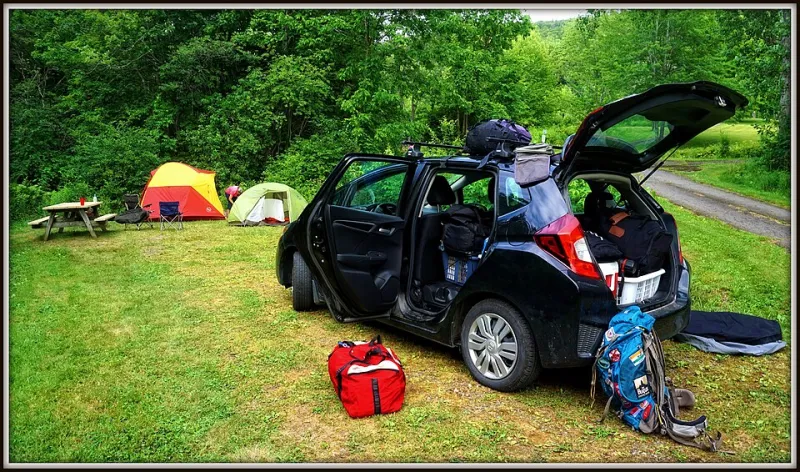
Photo: Wallace Howe from Canada, CC BY-SA 2.0, via Wikimedia Commons
Long before streaming playlists and curated festival lineups, American families were passing down folk music the old-fashioned way — crammed into a station wagon somewhere between Tulsa and Amarillo. The family road trip, it turns out, has always been one of the most powerful and underrated engines of roots music culture in this country.
Nobody planned it that way. It just happened, mile by mile, chorus by chorus, generation by generation.
The Original Backseat Curriculum
Think about what actually goes on during a long family drive. The radio drifts between stations. A parent hums something half-remembered from their own childhood. A kid in the back seat asks what that song is. Before long, everybody's attempting the words together, fumbling through verses, laughing at the wrong notes. That's not just entertainment. That's oral tradition in real time.
Folklorists have long understood that music survives not through institutions but through repetition in intimate spaces. And honestly, there's no space quite as intimate — or as captive — as a moving vehicle on a sixteen-hour drive to see Grandma. The backseat of a family car functions like a tiny, rolling concert hall where the audience has absolutely nowhere else to be.
For decades, families crossing the American interior stumbled onto regional radio stations broadcasting sounds they'd never encounter in their hometowns. A family from suburban Ohio might catch a Cajun two-step drifting out of a Louisiana station near Baton Rouge. A West Coast family driving through New Mexico might find themselves transfixed by norteño accordion bleeding through the static. These weren't planned cultural exchanges. They were accidents. Beautiful, formative accidents.
Chance Encounters on the Two-Lane
The road trip doesn't just transmit music — it creates the conditions for discovering it. Pull off at a roadside diner in the Texas Hill Country and there's a good chance someone's playing live on a Friday night. Stop at a general store in the Smoky Mountains and there might be a hand-lettered sign advertising a bluegrass picker playing on the back porch. These aren't venues that show up in any app. You find them because you're moving slowly through a place, paying attention.
Countless touring Americana artists will tell you the same story: they meet fans who first heard about them through a parent or grandparent who caught a show on the road years ago. A grandmother who saw a young songwriter at a roadhouse in Tennessee in 1987 tells her grandkids about it every Thanksgiving. Those grandkids eventually go looking. The thread holds.
That's a kind of audience-building no marketing budget can replicate. The road trip creates not just listeners but invested listeners — people who feel like they discovered something real, something that belongs to them and their family's story.
Sing-Alongs as Shared Mythology
There's a reason certain songs become road trip standards across American families regardless of geography or background. "This Land Is Your Land." "Take Me Home, Country Roads." "500 Miles." "King of the Road." These aren't just catchy tunes — they're songs about movement, about the American experience of being somewhere between here and there. Singing them in a moving car isn't accidental. It's almost ceremonial.
Kids who grew up belting out Woody Guthrie songs in the backseat don't just remember the melody. They absorb something about what those songs meant to the adults who taught them. The geography in the lyrics starts to feel personal once you've actually driven through it. Suddenly "This Land" isn't an abstraction — it's the red dirt of Oklahoma you watched scroll past the window while your dad sang off-key in the front seat.
That's how folk music has always worked. It attaches itself to lived experience. The road trip just happens to provide an unusually concentrated dose of both.
Regional Discovery and the Slow Drive
Something important gets lost when families fly everywhere. The in-between places disappear. And those in-between places — the small towns, the county fair grounds, the roadside honky-tonks — are exactly where American roots music has always lived.
Families who drive through the Mississippi Delta don't just see flat farmland. They pass through towns where the blues got its name. Families who take the Blue Ridge Parkway wind through communities where old-time string band music never really went out of style. These aren't museum exhibits. They're living, breathing musical ecosystems, and you can only really encounter them at road speed.
There's a whole generation of Americana fans who trace their musical awakening to a specific stretch of highway. Maybe it was a local AM station playing classic country somewhere in rural Kansas. Maybe it was stopping for gas in a small Arkansas town and hearing something extraordinary drifting out of a bar across the street. The road doesn't just take you somewhere — it introduces you to sounds you weren't looking for.
Passing the Torch at 75 Miles Per Hour
What makes the family road trip such an enduring vehicle for folk tradition is the way it collapses generational distance. Grandparents who might struggle to connect with teenagers over dinner somehow find common ground singing together for six hours on the interstate. Music that skips a generation in normal life gets transmitted naturally when everyone's stuck in the same moving box.
A grandfather who grew up with Bill Monroe might not know how to bring up bluegrass at the kitchen table. But put him behind the wheel of a car for a long haul and he'll find a way. The road creates permission. It loosens things up. The usual social scripts get a little blurry somewhere past the third rest stop.
That's something no festival lineup, however well-curated, can fully replicate. The best Americana festivals are incredible — the community, the discovery, the shared experience of live music under open sky. But the family road trip does something quietly different. It makes folk music personal before a kid ever sets foot in a festival field.
The Road Was Always the First Stage
At Ramblin' Roads Fest, we talk a lot about where the road meets the song. And maybe the truest version of that meeting isn't on a festival stage at all. Maybe it's in a beat-up minivan somewhere on I-40, three kids in the back, someone's dad trying to remember the second verse of "Midnight Special," a grandmother in the passenger seat who actually knows it.
That's the festival that never got a poster. No headliners, no merch booth, no ticket price. Just family, motion, and music moving through the American interior the same way it always has — one generation handing it to the next, somewhere between the last town and the next one.