Reading the Room, Reading the Region: How Smart Touring Artists Let the Land Write the Setlist
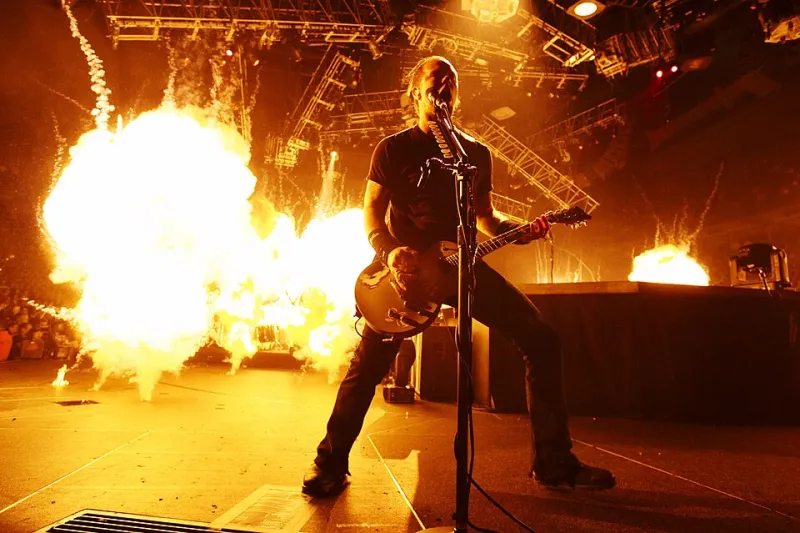
Photo: DallasFletcher, CC BY-SA 4.0, via Wikimedia Commons
There's a version of touring where every night looks the same. Same opener, same closer, same banter between the third and fourth song. Efficient, sure. But for a certain breed of Americana and folk artist—the ones who take the road seriously as a creative partner—that kind of cookie-cutter approach misses the whole point.
For these musicians, the setlist is less a schedule and more a conversation. And like any good conversation, it changes depending on who's in the room.
The Night Before the Show
Ask singer-songwriter and touring veteran Clara Briggs how she builds a setlist, and she'll tell you it starts long before soundcheck. "I do homework," she says simply. "If I'm playing a small town in eastern Kentucky, I'm reading about it the day before. I'm looking at what the economy used to be, what it is now. I'm thinking about which songs I have that speak to that kind of place without being condescending about it."
That kind of pre-show research isn't unusual among roots artists who've been on the circuit long enough to understand that audiences in different parts of the country carry different emotional weights into the room with them. A crowd in a former mill town in the Carolina Piedmont isn't going to receive a song about labor and loss the same way a crowd in a college-town bar in Colorado will. Neither response is wrong—but a performer who ignores that distinction is leaving something real on the table.
For multi-instrumentalist and road-tested folk artist Deke Calloway, who's been crisscrossing the country in a beat-up Sprinter for the better part of a decade, the geography itself does some of the telling. "When I'm driving through the Texas Hill Country or coming down from the Ozarks, the landscape gets inside me," he explains. "I'll be riding through that kind of country and suddenly I know exactly which songs want to come out that night. The land has a sound, and you either tune yourself to it or you don't."
Regional Resonance Isn't Pandering
There's a fine line here, and the best touring artists walk it carefully. Playing a mining song in a former coal town because it feels thematically appropriate is one thing. Doing it in a way that feels like you're performing sympathy rather than expressing genuine connection is something else entirely—and audiences, especially in working-class and rural communities, can smell the difference from the back row.
"People in these towns have heard outsiders romanticize their hardship their whole lives," says Briggs. "The songs I choose aren't about proving I understand them. They're about opening a door. If a song I wrote in my own life happens to land in a place where someone's living a version of the same thing, that's the magic. But you have to pick the right song to open that door."
What that looks like in practice can be surprisingly subtle. Calloway describes playing a show in a small Louisiana parish town where the crowd was mostly older, mostly Cajun-rooted, and deeply skeptical of outsiders. Rather than leaning into his more polished originals, he opened with a traditional waltz he'd learned years earlier from an old-timer in a similar part of the state. "That song said, 'I've been paying attention.' Everything after that, they were with me."
The Setlist as Cultural Dialogue
For some artists, the regional adjustment goes even deeper than song selection—it shapes the whole arc of the performance. Folk duo The Harrow & Pine, who've made a reputation for their historically-grounded Appalachian material, describe building what they call "place-specific sets" for certain stops on their tours.
"If we're playing somewhere with a strong Indigenous history, we'll pull in songs that acknowledge that," says one half of the duo, Maren Sollie. "If we're in a border town in South Texas, we're thinking about the corrido tradition, about what that land has meant to multiple cultures over centuries. We're not trying to play those traditions—that's not our place. But we can acknowledge them, make space for them in our set, and point people toward the artists who actually live inside those traditions."
That kind of curatorial generosity—using your own setlist to gesture toward a broader musical ecosystem—turns a single show into something closer to a cultural conversation. It's the difference between an artist passing through a place and an artist actually arriving in it.
When the Setlist Has to Change on the Fly
Not all of this planning survives contact with the actual room, of course. Any experienced touring musician has a story about walking into a venue and immediately knowing that the carefully assembled setlist needs to be torn up and rebuilt from scratch.
Calloway recalls a show in a small Montana town where he'd planned a relatively introspective set—quieter songs, slower tempos, a lot of space. Then he walked in and found a room full of ranch workers who'd just finished a brutal week and were there to shake something loose. "I looked at my setlist and I thought, 'Nope.' I started over in my head in about thirty seconds. Pulled out everything with some stomp to it and just rode that energy all night."
Briggs has had the opposite experience—arriving somewhere expecting an energetic bar crowd and finding a room full of people who needed something gentler. "You can feel it when people are carrying something heavy," she says. "That's not a night for your big singalong. That's a night for the songs that say, 'I see you. You're not alone out here.'"
The Road Keeps Rewriting the Map
What makes this approach so compelling—and so central to what Americana and folk music are really about—is that it treats performance as a living, responsive act rather than a product being delivered on schedule. The setlist, in this sense, is never really finished. It's just a draft that gets revised every night by a new room full of people in a new corner of this enormous, endlessly complicated country.
For the artists doing it right, that's not a burden. It's the whole reason to be out there.
"People ask me if it's exhausting, thinking this hard about every show," Briggs says. "But I don't think about it like work. I think about it like listening. And the road is always talking. You just have to be quiet enough to hear what it's saying."