Grease, Grit, and Good Songs: The Repair Shops Where the Road Hands Musicians Their Best Material
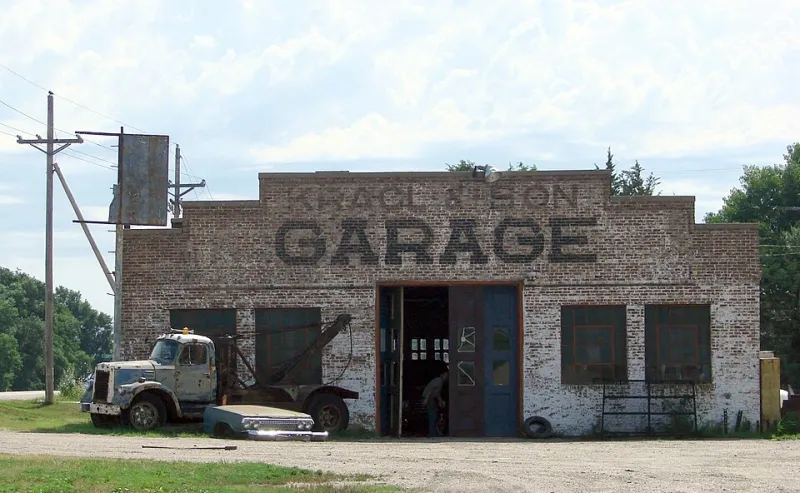
Photo: inkknife_2000 (7.5 million views +), CC BY-SA 2.0, via Wikimedia Commons
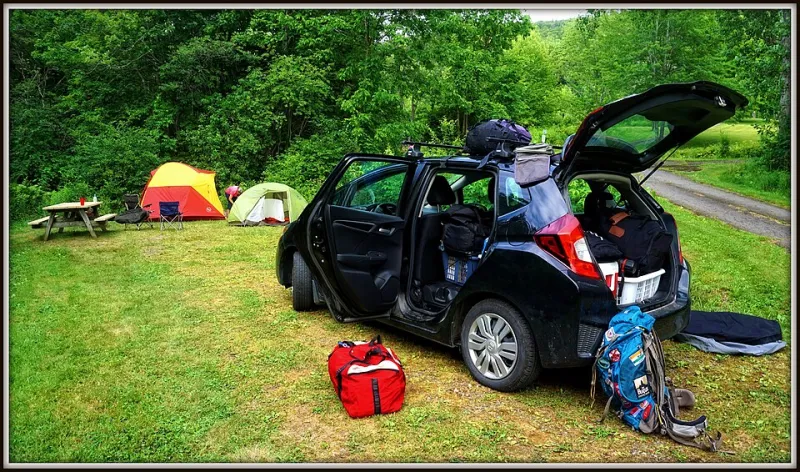
There's a particular kind of dread that settles over a touring van when something goes wrong. The shimmy in the steering. The smell of something burning that definitely wasn't there an hour ago. The dashboard light that flickers on somewhere between a Thursday night show in Tupelo and a Saturday afternoon set in Memphis. For most people, a breakdown is an inconvenience. For a touring musician hauling instruments, merch boxes, and a loose itinerary across rural America, it can feel like the road itself is making a demand: slow down and pay attention.
What happens in the hours that follow — in the waiting rooms and gravel lots of roadside repair shops — turns out to be some of the most fertile ground in all of roots music. Not because anyone planned it that way, but precisely because nobody did.
The Accidental Pause
Roots music has always drawn its power from lived experience. The highway, the diner, the late-night drive — these aren't just lyrical backdrops. They're the actual conditions under which Americana gets made. But the breakdown is different from the open road. It's involuntary stillness in a culture that celebrates movement. And that forced stop, it turns out, creates something rare: genuine, unscheduled human contact.
When a band rolls a limping van into a tire shop outside of Amarillo or a small-engine mechanic's lot in rural Kentucky, they're entering someone else's world entirely. There's no green room. No stage. No audience that paid to be there. Just a few plastic chairs, a coffee maker that's seen better decades, and a mechanic who has absolutely no idea who you are — and doesn't particularly need to.
That anonymity is the whole point.
"You're not a musician in those moments," says one touring folk artist who's been running the Americana circuit for the better part of a decade. "You're just some person whose van is broken. And that levels everything out in a way that's really hard to manufacture."
Conversations That Don't Happen Anywhere Else
The waiting room of a repair shop is its own kind of confessional booth. People sitting in them tend to talk. Maybe it's the shared helplessness, maybe it's boredom, maybe it's just that there's nothing else to do while someone else has the keys to your immediate future. Whatever the reason, the conversations that unfold in those spaces tend to go somewhere real.
Musicians have reported hearing stories in repair shop waiting rooms that ended up shaping entire albums — the older gentleman in eastern Tennessee who described watching his family's farm get sold off piece by piece, the retired railroad worker in Missouri who hummed an old work song he'd half-forgotten, the young woman in rural Alabama who talked about her grandmother's church choir with a quiet pride that stuck around long after the radiator hose got replaced.
These aren't interviews. Nobody's taking notes. The exchange is horizontal — two people killing time — and that's what makes it stick.
The Mechanics Themselves
It would be easy to frame this story entirely around the musicians, but that misses half of it. The mechanics and shop owners at the center of these encounters often bring their own deep relationship with music to the table.
In a lot of rural American towns, the local repair shop is one of the last places where people actually gather. The barbershop might be gone. The hardware store gave way to a big-box outlet forty miles up the interstate. But the shop is still there, still necessary, still running a radio through the whole working day. Country, gospel, classic rock, old blues — the soundtrack of a mechanic's bay tends to reflect the musical DNA of wherever you happen to have broken down.
Some shop owners have become informal connectors in their communities, the kind of people who know everyone and get mentioned in the same breath as the local radio station or the diner on the square. More than a few have stories about musicians who rolled through, ended up staying for dinner, and played a set on the back porch before heading out the next morning.
"We had a guy come through here with a blown alternator," recalls the owner of a small shop in the Mississippi Delta. "Took us two days to get the part. By the time he left, he'd eaten at my table twice, met half the town, and my daddy had taught him a chord progression he'd been sitting on for thirty years."
When the Delay Becomes the Song
The mechanics of inspiration are hard to pin down, but the pattern shows up again and again in the way roots musicians talk about their craft. The best material tends to come not from trying to write, but from being somewhere unexpected, fully present, with nowhere else to be.
Breakdowns engineer exactly that condition. The phone dies or the signal disappears. The laptop stays in the van. There's nothing to do but sit, look around, and absorb whatever's in front of you. For a songwriter, that's not dead time — it's raw material being loaded in.
Several well-known Americana tracks have origin stories that trace back to vehicle trouble. A lyric overheard from a mechanic's radio. A phrase scribbled on a receipt while waiting for a tire rotation that turned into a chorus. A rhythm picked up from the sound of an air compressor cycling on and off in an otherwise quiet shop.
The road gives a lot, but sometimes it gives most when it takes something away first.
A Different Kind of Venue
At Ramblin' Roads Fest, we spend a lot of time celebrating the stages, the venues, the festivals, and the circuits that carry roots music forward. But part of what makes this music what it is — what keeps it honest and grounded and worth caring about — is everything that happens between the stages.
The repair shop isn't on any festival map. Nobody's selling tickets to the waiting room. But in its own unassuming way, it's doing something that the most carefully curated venue can't always pull off: it's putting musicians in the middle of real American life and refusing to let them skip past it.
The road will always break something eventually. The van, the schedule, the careful plan. And in that breaking, if you're paying attention, there's usually a song waiting to be found — buried somewhere between the coffee maker and the parts counter, in the voice of someone who never knew they were contributing to anything at all.
That's Americana. Right there in the waiting room, with nowhere else to be.