Pumping Gas, Playing Tunes: The Truck Stop Owners Who Quietly Run Rural America's Most Honest Music Venues
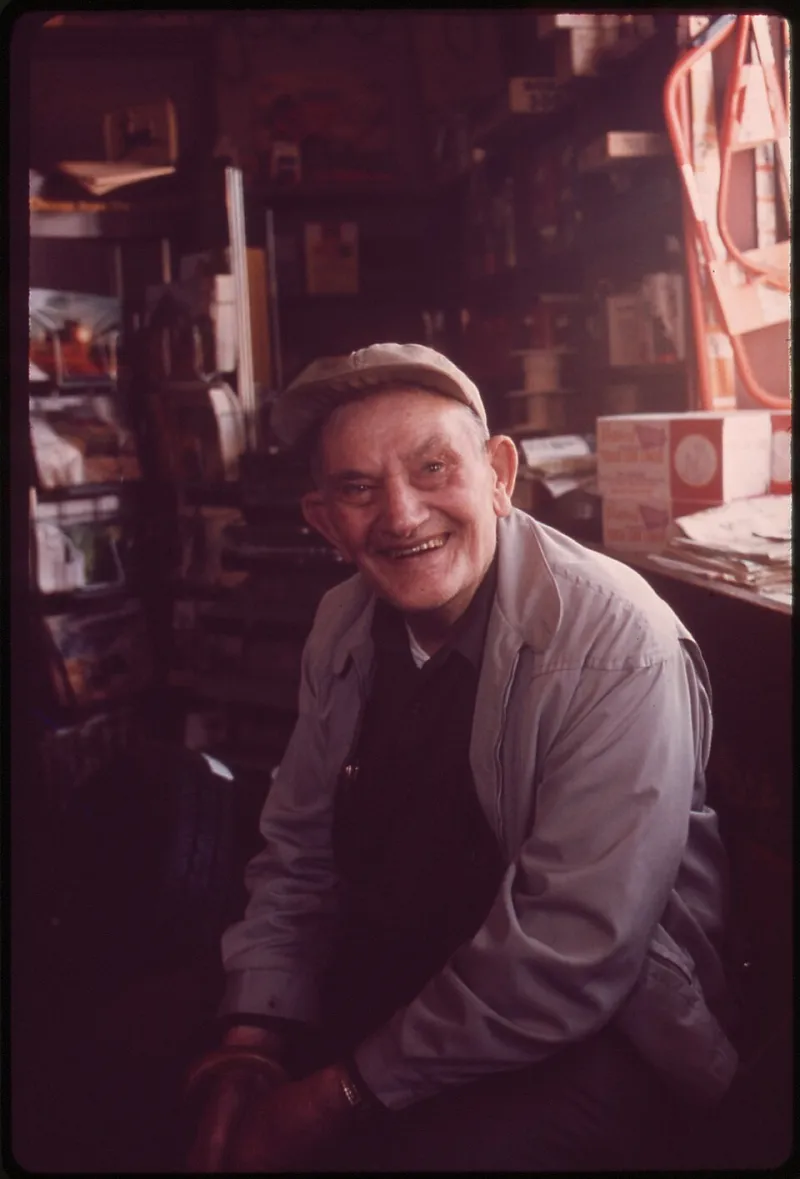
Photo: Charles O'Rear, Public domain, via Wikimedia Commons
Pull off Interstate 40 somewhere between Amarillo and Tucumcari, and there's a decent chance the most important music business transaction happening in that zip code is going down next to a fountain drink machine. Not in a concert hall, not on a festival stage — at a counter staffed by someone who also knows where the nearest campsite is and whether the county road got washed out last spring.
This is the part of Americana's ecosystem that rarely makes it into the press releases.
The Counter as the Booking Desk
For touring folk and roots musicians driving the secondary highways of rural America, the gas station stop is rarely just about fuel. It's reconnaissance. It's community radio. It's sometimes the only place within forty miles where a stranger can figure out whether the town ahead is worth a detour.
Dale Hutchins has operated a truck stop outside Pikeville, Tennessee for going on twenty-two years. He started keeping a corkboard near the register about a decade ago — just a place for local flyers and farm auction notices. Somewhere along the way, musicians started pinning up their own cards and show announcements. "I didn't plan it," he says, refilling a coffee pot without looking up. "People just started leaving stuff. Now I get calls from bands I've never heard of asking if they can put something up."
Hutchins doesn't charge for the corkboard space. He also doesn't charge the acoustic duo that occasionally sets up on his covered porch on Friday evenings, drawing in regulars who'd otherwise have nowhere local to catch live music. "It keeps people here a little longer," he says with a shrug, like it's the most obvious thing in the world.
Merch Where You'd Least Expect It
One of the more surprising developments in this informal network is the rise of the convenience store as a legitimate merch outlet. A handful of station owners across Appalachia, the Gulf Coast, and the rural Midwest have started dedicating shelf or counter space to CDs, cassettes, and hand-printed T-shirts from local and regional Americana artists.
In Itta Bena, Mississippi — a town of barely 1,500 people — a gas station off Highway 7 reportedly moves more units of a locally pressed blues record than most of the artist's online channels combined. The owner, who asked not to be named, started stocking music almost by accident after a musician left a box of CDs on consignment and never came back for them. They sold out in two weeks.
"People around here know the guy on the cover," she explained. "That's the whole thing. They went to school with his cousin. That's not something Spotify can do."
That hyper-local credibility is exactly what makes these spots so valuable in the touring ecosystem. A recommendation from a gas station owner who's lived in a county for thirty years carries weight that no algorithm can replicate.
The Informal Network Nobody Mapped
What's remarkable is that this network operates almost entirely without documentation. There are no directories, no booking agencies, no official affiliations. It runs on word of mouth passed between touring musicians at campgrounds and festival lots.
"You just kind of learn it as you go," says one singer-songwriter who tours the Southeast in a converted cargo van. "Somebody tells you: when you hit this town, stop at this particular Shell station, the woman behind the counter knows everyone. She'll tell you who's playing that weekend and whether the bar down the road is worth your time."
This informal intelligence-sharing has real consequences for how tours get routed. Some musicians have restructured their driving schedules specifically to pass through certain stops, not because of geography, but because of the people inside. A well-connected station owner can make a phone call that results in a last-minute house concert or an opening slot at a local honky-tonk. That's not a small thing when you're three states from home and the van needs new tires.
Why These Spaces Work
There's a sociological logic to all of this that makes sense when you think about it. Gas stations and truck stops are among the last genuinely public gathering spaces in rural America. Diners come and go. Post offices have reduced hours. Churches serve specific congregations. But the gas station is neutral ground — everybody needs to stop there eventually.
That neutrality creates an unusual openness. A touring musician rolling in from out of state isn't an outsider in quite the same way they might be at a local bar. They're just another customer, which paradoxically makes conversation easier.
"I've had more real talks about music at gas station counters than at most venues," says a fiddler who's been touring the Ozarks circuit for over a decade. "There's no pretense. Nobody's trying to impress anybody. You're just two people talking."
Giving Credit Where It's Due
The Americana music world spends a lot of time celebrating its venues — the legendary dancehalls, the storied roadhouses, the festival grounds with decades of history soaked into the soil. That's all worth celebrating. But the quieter infrastructure deserves its own recognition.
The gas station owner who stocks a local musician's CD isn't trying to be a tastemaker. The truck stop operator who lets a band set up on the porch isn't running a venue. They're just doing what people in small towns have always done: filling in the gaps, making things work, keeping community alive in the spaces between the official institutions.
For a genre that's always claimed to speak for the overlooked and the in-between, Americana could stand to pay a little more attention to the people holding it together at the edges of the map. Next time you're filling up somewhere off the beaten path, take a look at that corkboard. You might find out something worth knowing.