Rolling Record Stores: How Touring Musicians Are Hauling Musical History Down the Highway
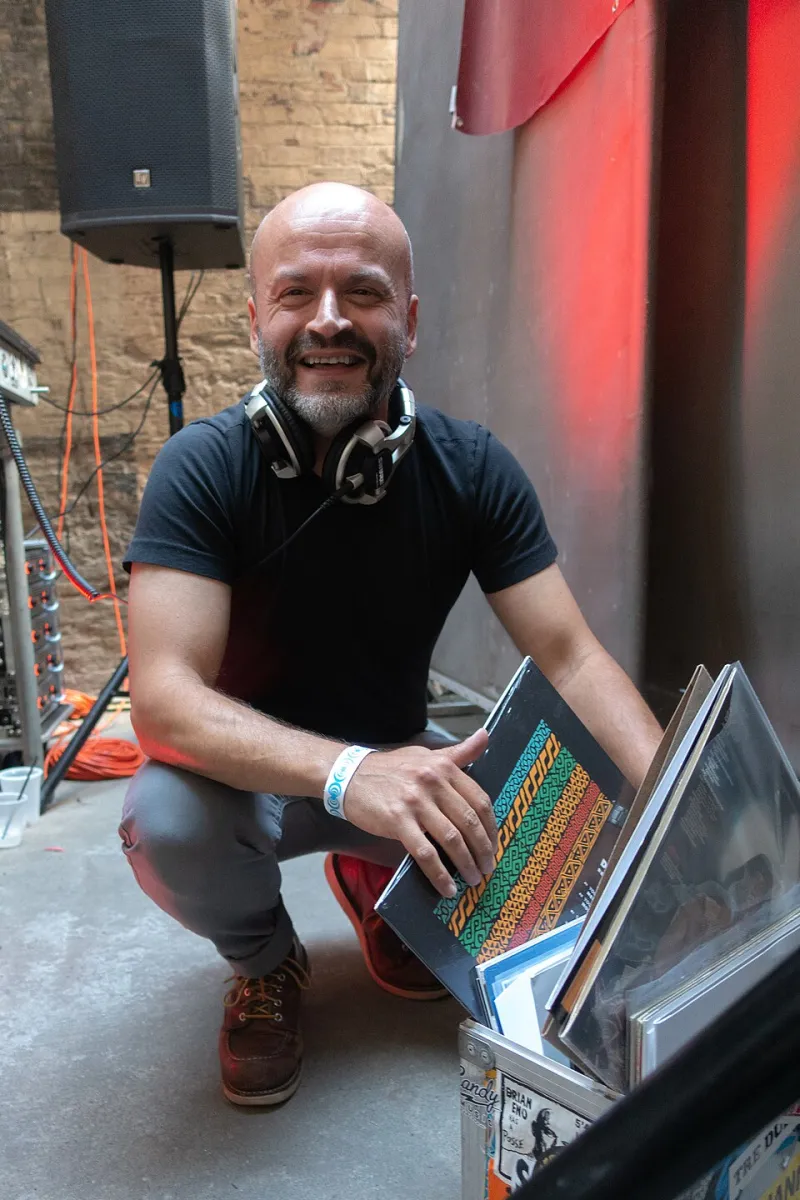
Photo: Deckblad, CC BY-SA 4.0, via Wikimedia Commons
The back of Marcus Delray's Econoline van looks like what would happen if a small-town record shop and a touring musician's gear closet had a baby and raised it on the road. Milk crates of vinyl are wedged between a guitar case and a duffel bag of merch. Dividers hand-labeled in permanent marker — Appalachian, Gulf Blues, Cajun & Zydeco, Pacific Northwest Folk — organize records that Delray has picked up at estate sales, flea markets, and thrift stores across thirty-some states over the past eight years.
He plays shows. He also sells records out of the back of that van at almost every stop. And increasingly, the two activities feel inseparable.
"The music I play and the music I sell are in conversation with each other," he says, flipping through a crate outside a festival campground in western North Carolina. "I can't really explain one without the other."
The Van as Archive
Delray is part of a loose, largely unorganized movement of touring folk and Americana musicians who've turned their vehicles into mobile record collections. The phenomenon doesn't have a name or a manifesto. It grew organically, the way most things in this world tend to — out of personal obsession, practical necessity, and the specific boredom and opportunity that comes with spending long stretches on rural highways.
For many of these musician-collectors, the record hunting started as a way to fill time between shows. Thrift stores and estate sales in small towns often yield surprising finds: privately pressed regional albums from the 1960s and '70s, local gospel records, obscure country and bluegrass releases that never made it onto any major label. The kind of stuff that disappears without a trace if nobody picks it up.
"Small towns are where the weird stuff survives," says one banjo player who tours the Mid-Atlantic and keeps a rotating stock of about 200 records in her van at any given time. "The big cities, everything's already been picked over. But you stop at a thrift store in rural Virginia and sometimes you find something that doesn't exist anywhere else."
Selling at Shows: A Different Kind of Merch Table
The setup at a typical show is informal. A folding table, a few crates, maybe a hand-written price list. Prices are usually modest — five to fifteen dollars for most records, more for genuinely rare finds. The musicians running these setups tend to be knowledgeable and enthusiastic in a way that's different from a traditional record store environment. They've listened to most of what they're selling. They have opinions.
That personal connection is a big part of the appeal for buyers. Festival attendees who might not otherwise dig through vinyl find themselves drawn in by a conversation that starts with "where are you from?" and ends with a recommendation for a 1974 pressing of a regional string band album they've never heard of.
"It's not like shopping," says one regular festival-goer who's bought records from several of these traveling setups over the years. "It's more like someone sharing something with you. They're not trying to upsell you. They just genuinely want you to hear this thing."
Preservation as a Side Effect
There's a preservation dimension to all of this that the musicians themselves often downplay but clearly feel. Regional pressings and privately produced records from the mid-twentieth century are genuinely fragile historical artifacts. Many exist in tiny quantities. When they end up in a landfill or get destroyed by water damage in a storage unit, that's it — the music is gone.
By pulling these records out of thrift stores and estate sales and putting them back into circulation, these traveling collectors are doing something that no institution is systematically doing. They're not academics or archivists. They're just people who think the music matters and don't want to see it disappear.
Some of the more dedicated collectors have started documenting what they find — photographing labels, noting pressing details, occasionally uploading audio to online archives. It's informal scholarship, conducted from the passenger seat between gigs.
"I found a record last year in a Goodwill in eastern Kentucky," says Delray. "No label information, no date, just a guy's name and 'Recorded at home, 1968.' I have no idea who he is. But somebody pressed that record, and somebody kept it for fifty years, and now I have it. That feels like a responsibility."
Communities Built Around Crates
One of the less expected outcomes of this phenomenon is the communities it creates. Festival campgrounds and venue parking lots, already social spaces, become even more so when there's a van with the back doors open and records to flip through. People who've never met start talking. Connections get made between artists from different regions who share influences. The vinyl becomes a common language.
Several musicians in this world describe meeting some of their closest collaborators over a record crate. There's something about the shared ritual of flipping through vinyl — the physical act of it, the patience it requires, the serendipity of what you find — that tends to slow people down and open them up.
"You can't scroll through a record crate," one guitarist points out. "You have to actually look at each one. That pace changes how you talk to people."
The Road Keeps the Collection Moving
There's a fitting circularity to the whole thing. Americana music has always been about transmission — songs and styles passed from person to person, community to community, generation to generation. The touring circuit was one of the original mechanisms for that transmission, carrying sounds from the Mississippi Delta to Appalachian hollows to Great Plains dance halls.
These rolling record collections are doing something similar, just in reverse. Instead of carrying a sound outward, they're gathering it up — pulling regional music out of obscurity, putting it in front of new ears, letting it find its way back into the living tradition.
The van hits the road. The records ride along. Somewhere down the highway, somebody hears something they've never heard before, and the chain holds.