Still Standing: The Scrappy Small-Town Music Halls That Refused to Go Quiet
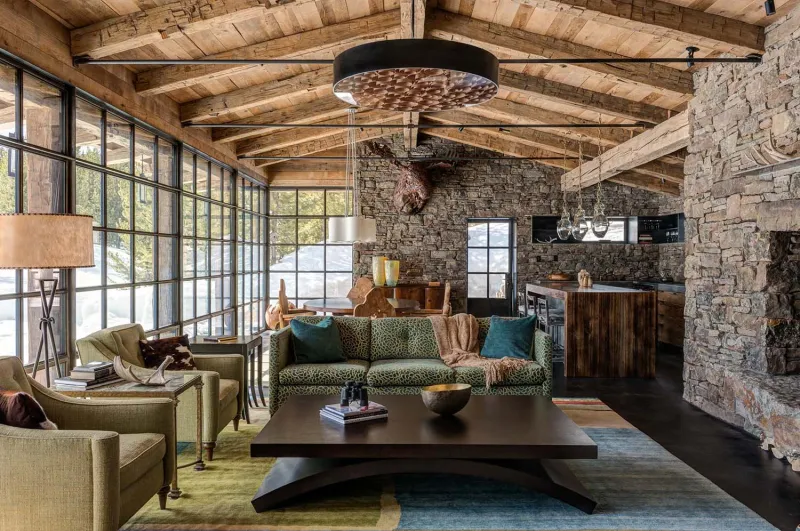
Photo: rustic historic small town music hall interior with stage lights wooden walls and audience, via cdn.homedit.com
The building had been a feed store, then a hardware shop, then nothing for about fifteen years. Its windows were boarded, its sign long gone, and most folks in town had stopped noticing it the way you stop noticing a missing tooth after a while. Then a couple of locals with more stubbornness than startup capital decided it should be a music hall again.
That story, in one form or another, is playing out in small towns and rural communities all across the United States right now. And for fans of Americana, folk, and roots music, it's just about the best news going.
The Disappearing Act That Wasn't
For a solid stretch of the 2000s and early 2010s, the narrative around small independent music venues was relentlessly gloomy. Rising rents, noise ordinances, competition from streaming, and the consolidation of the live music industry into the hands of a few mega-promoters had squeezed hundreds of beloved rooms out of existence. The conventional wisdom held that the era of the intimate, community-rooted music hall was effectively over.
That conventional wisdom, it turns out, was wrong.
What's emerged over the past several years is a genuine grassroots resurgence of small-capacity venues — many of them in places that don't show up on the standard touring maps. Converted churches, refurbished grange halls, century-old opera houses, and former general stores are reopening their doors, and touring Americana and folk acts are filling them up.
The reasons are layered and interesting. Partly it's an audience exhaustion with the impersonal enormity of arena-scale shows. Partly it's a touring economy that increasingly rewards artists who can build loyal regional followings over years of consistent road work rather than chasing viral moments. And partly — maybe mostly — it's communities deciding that live music isn't a luxury. It's infrastructure.
What Makes a Room Come Back
Not every historic venue has the bones for a revival. The ones that make it tend to share a few qualities: authentic architectural character that can't be replicated in a purpose-built space, community ownership or deep local investment, and programming that's genuinely rooted in the musical traditions of the region.
Take the Lyric Theatre in Stuart, Virginia, a town of fewer than 1,500 people nestled in the Blue Ridge foothills. Built in 1941, shuttered for decades, and painstakingly restored by a coalition of locals and regional arts organizations, the Lyric now hosts an impressive calendar of Americana and acoustic acts. Touring musicians who play there often describe it as one of their favorite rooms in the country — not because of the amenities (which are modest) but because of the feel. Old wood, good acoustics, and an audience that drove a long way to be there.
Or consider the Continental Club in Austin, which predates the city's current music-industry reputation by decades, or the Station Inn in Nashville — a bluegrass institution that has somehow survived the gentrification of the Gulch neighborhood around it through sheer force of reputation and community loyalty.
These aren't just venues. They're landmarks. And preserving them is an act of cultural conservation as meaningful as restoring a historic building or protecting a stretch of wilderness.
The Challenges Are Real
It would be dishonest to paint this revival as entirely triumphant. The obstacles facing independent music halls are substantial and ongoing.
Insurance costs have climbed steeply. Booking fees for even mid-tier touring acts have increased as artist earnings from streaming have collapsed, pushing musicians to extract more from live performance. Sound equipment that meets modern expectations requires serious capital investment. And in rural areas, the simple logistics of getting audiences to a show — when the nearest sizable city might be ninety minutes away — require creative marketing and strong community relationships.
Then there's the staffing question. Many of these venues run on volunteer labor and the passionate unpaid hours of a small core group of true believers. That model is sustainable until it isn't, and burnout among venue operators is a genuine crisis that doesn't get enough attention.
Federal and state arts funding has helped some venues stay afloat, and the Save Our Stages Act — passed as part of pandemic relief legislation — provided a lifeline to many independent rooms that might otherwise have closed permanently. But advocacy for continued public investment in live music infrastructure remains an ongoing fight.
A Field Guide to Historic Halls Worth the Drive
For roots music fans willing to make the journey, these venues represent some of the most rewarding live music experiences available anywhere in the country.
The Handlebar — Greenville, SC. A beloved institution in a city with a surprisingly rich music scene, the Handlebar has been presenting Americana, alt-country, and folk acts for decades. The room is intimate, the sound is excellent, and the booking is consistently adventurous.
Shakori Hills Grassroots Festival — Pittsboro, NC. Not a traditional venue but a festival site that functions as a community gathering point for Piedmont-region roots music fans. The grounds themselves have a history worth knowing.
The Blue Wing — Upper Lake, CA. Housed in a building that dates to the 1860s, this Northern California spot brings in folk and Americana acts to a room that feels genuinely historic rather than merely decorated to look that way.
Gruene Hall — New Gruene, TX. Texas's oldest continuously operating dance hall, Gruene Hall has hosted everyone from Lyle Lovett to Merle Haggard. The corrugated metal roof, the wooden dance floor, the open-air sides — it's an experience that simply doesn't exist at scale.
The Ark — Ann Arbor, MI. A nonprofit folk venue that has been a cornerstone of the Midwest acoustic music scene since 1965. Its commitment to emerging artists alongside established names makes it a genuinely important institution.
Why This All Matters
Roots music has always been community music. Before recordings, before radio, before streaming, it existed in the exchange between performer and audience in a shared physical space. The folk tradition, the bluegrass tradition, the old-time tradition — all of it was transmitted person to person, room to room, town to town.
When those rooms disappear, something more than real estate is lost. The pipeline through which new artists develop their craft, through which regional musical traditions stay alive, through which communities gather around something meaningful — all of that weakens.
Conversely, when those rooms come back, they bring a lot with them. Jobs, community identity, tourism dollars that stay local, and something harder to quantify but just as real: a reason for people to show up for each other.
The small music halls making their comeback across America's back roads aren't just nostalgia projects. They're arguments — made in wood and sound and light — that the way we've always done this still works. Maybe better than ever.
Find one near you. Make the drive. Stay for the whole show.