Knock Three Times: The Pre-Show Rituals That Keep Touring Musicians Grounded Across America
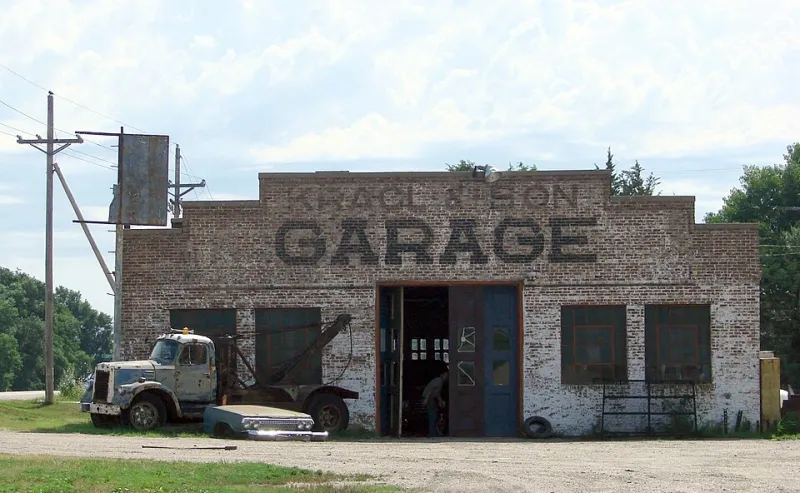
Photo: PreDigitalLegacies, CC0, via Wikimedia Commons
The venue doors haven't opened yet. The PA is still humming through its warm-up. And somewhere behind the stage — in a green room that smells like old carpet and takeout containers — a guitarist is tapping her boot heel three times against the concrete floor. Not because the floor needs tapping. Because it always gets tapped.
That's the thing about pre-show rituals in the world of Americana and roots music. They don't have to make sense to anyone else. They just have to work.
Where the Routine Begins
Ask almost any touring folk or Americana musician about their pre-show habits and you'll get one of two reactions: a laugh that trails into something more serious, or a slow nod that says I was hoping you'd ask. These rituals aren't accidents. They're accumulated responses to the chaos of the road — tiny anchors dropped into unfamiliar ground.
"Every town feels different when you pull in," says Caleb Marsh, a roots singer-songwriter who's spent the better part of a decade playing listening rooms and roadhouses across the South and Midwest. "You don't know the vibe yet. You don't know if the crowd's gonna be talkative or quiet, whether the room sounds like a shoebox or a cathedral. So you do the things you can control."
For Marsh, that means a specific order of operations: arrive at the venue, walk the stage alone before anyone else sets foot on it, find the nearest diner or lunch counter within walking distance, and order black coffee and something with eggs — regardless of the time of day. "I've had eggs at nine o'clock at night in Amarillo," he says. "The ritual doesn't care what the clock says."
Regional Flavors, Regional Superstitions
What's fascinating about these pre-show habits is how they pick up regional texture over the years. A musician who started touring the Gulf Coast carries different energy into a show than one who cut their teeth on the Vermont coffeehouse circuit, and their rituals often reflect that.
Down South, several touring musicians mention the habit of stepping outside the venue just before doors open — not to smoke, not to make a call, but simply to stand in the air and listen to whatever the town is doing. Street noise, distant traffic, a church choir filtering out of a building three blocks away. "I want to hear the town before it hears me," explains fiddler Dara Hollis, who tours the Appalachian and mid-Atlantic circuit. "It sounds corny, but it genuinely changes how I play. If it's a Friday night and people are loud and loose outside, I know what kind of show we're walking into."
In the Midwest, where towns can feel quieter and more self-contained, musicians tend to talk about rituals that are more inward-facing. Journaling before soundcheck. Running through a single song — always the same one — acoustically in the green room. One banjo player who tours the Great Plains circuit says she always calls her grandmother before a show, even though her grandmother passed away six years ago. "I just tell her where I am," she says quietly. "What the town looks like. She always wanted to travel."
Out West, particularly along the California and Pacific Northwest touring routes, the rituals often involve movement — long walks, stretching routines, or a specific hiking trail if the geography allows. "I need to feel the ground under my feet before I stand on a stage," says multi-instrumentalist Trace Duvall, who plays the mountain and coastal festival circuit. "Something about connecting to the actual land makes the songs feel more honest."
The Lucky Objects
Beyond behavior, there are objects. Touring musicians are, as a group, extraordinarily attached to specific physical talismans — and the stories behind those objects could fill their own album's worth of liner notes.
Battered guitar picks passed down from mentors. A particular brand of string that hasn't been manufactured in fifteen years, hoarded in bulk from the last remaining stock. A photograph tucked into the case. A coin from a town where something important happened.
"I have a Waffle House menu from a place in Georgia that doesn't exist anymore," admits one touring duo's lead vocalist, who asked to remain unnamed. "We ate there the night we got our first real booking offer. I've carried it ever since. It's laminated now. It's disgusting. I love it."
What's notable is how rarely these objects are replaced. The rituals around them calcify quickly. Lose the pick, play a bad show. Forget the photograph, feel off all night. Whether the causation is real is beside the point — the belief in the connection is what matters, and that belief is doing genuine psychological work.
The Science of the Superstition
Sports psychologists have written extensively about how pre-performance routines reduce anxiety and create focus, and the same logic applies here. When you're playing a venue you've never seen, in a town you barely know, for an audience that has no particular reason to trust you yet, the familiar is a lifeline.
The ritual is a portable home base. It's the one constant in a touring life that's defined by constant change — different stages, different acoustics, different green rooms, different opening acts. The knock on the wall, the eggs at the diner, the phone call to nobody: these things say you've done this before, and it went fine, and it'll go fine again.
"I don't think of it as superstition exactly," says Marsh. "I think of it as remembering who I am before I go out there and try to tell other people something true. You can't do that if you're scattered."
What the Road Teaches
The longer musicians tour, the more elaborate the rituals tend to become — not because the nerves get worse, but because the catalog of experiences grows. Each new habit is a response to something that happened: a bad show in a room where the ritual was skipped, a transcendent night that followed a particularly careful pre-show sequence.
And occasionally, the rituals evolve. A musician who spent years refusing to eat before a show might discover, somewhere in rural Tennessee, that a bowl of soup an hour before stage time changes everything. The superstition updates. The road keeps teaching.
That's maybe the most Americana thing about all of it. These rituals aren't about control. They're about relationship — with the music, with the audience that hasn't arrived yet, with the touring life itself. They're small ceremonies that say: this matters, I'm ready, let's go.
The boots tap the floor three times. The coffee goes cold. Somewhere outside, the town is doing what towns do. And in twenty minutes, the songs begin.