Haunted Miles: What Happens When Touring Artists Drive Straight Into America's Musical Legends
There's a moment every touring musician eventually hits. You're somewhere on Highway 61, the flat Delta light doing that amber thing it does around dusk, and you realize the ground beneath your tires has been sung about more times than you could ever count. Robert Johnson supposedly sold his soul at a crossroads somewhere nearby—or maybe it was somewhere else entirely, depending on who's telling the story. Either way, the mythology is thick out here, and it presses against you whether you asked for it or not.
For a lot of Americana and roots artists, touring through America's most storied musical regions is less a bucket-list adventure and more a complicated negotiation. There's reverence, sure. But there's also the very real risk of becoming a tourist in your own artistic life.
The Weight of the Delta
Ask almost any roots musician about their first time driving through the Mississippi Delta, and you'll get a version of the same story. The landscape is quieter and flatter than they expected. The poverty is more visible. The music is everywhere—leaking out of juke joints, humming through AM radio frequencies, embedded in the very names of the towns they pass through.
Nashville-based singer-songwriter Carla Dennings, who tours the South extensively, puts it plainly: "The first time I played Clarksdale, I almost didn't go on. I'm standing backstage thinking about Muddy Waters, Howlin' Wolf, all of it—and I'm about to walk out there and play my little songs about moving apartments and bad coffee. It felt absurd."
She went on anyway. And she says the audience—a mix of locals and out-of-towners—received her set with the kind of warmth that quietly recalibrated something in her. "They weren't comparing me to anyone. They just wanted music. The mythology lives in our heads more than it lives in theirs."
That tension—between the stories we carry into a place and the reality we find there—is something a lot of touring artists grapple with when plotting routes through historically significant regions. The Delta, Appalachia, the Texas Hill Country, New Orleans, the Ozarks: these aren't just geographic coordinates. They're emotional destinations loaded with expectation.
Booking the Route, Booking the Reckoning
For many artists, the decision to route through a legendary musical territory is made months in advance, in the unglamorous back-and-forth of tour planning spreadsheets and venue emails. But the experience of actually being there tends to arrive as something much less manageable than a calendar entry.
Austin-based guitarist and bandleader Marco Reyes, who books an annual spring circuit through East Texas and Louisiana, says the planning stage is where he tries to do his homework—listening deeply to regional artists, reading local histories, reaching out to venue owners who know the culture better than any guidebook ever could. "I don't want to show up performing my idea of what that place sounds like," he says. "That's the worst version of what I could do. I want to show up as myself, but informed."
That distinction—between honoring a tradition and cosplaying it—comes up constantly in conversations with touring musicians. There's a real fear of what some call "heritage tourism" in musical form: rolling through the Delta or Appalachia with a slide guitar and a vintage aesthetic, checking a box without contributing anything genuine.
Old-time fiddle player and touring veteran Jessie Tatum, who grew up in western North Carolina and has spent years playing the Appalachian circuit, is blunt about the line. "There are artists who come through here to absorb the mystique, take a few photos at old cabin sites, and write a song that name-drops a mountain. And then there are artists who actually sit with people, listen to how they talk, eat where they eat, and let all of that do something slow and real to their music. You can always tell the difference."
Subverting the Script
Not every artist who tours through legendary territory feels the pull to genuflect. Some deliberately push back.
Singer and multi-instrumentalist Dara Okonkwo, who tours a circuit that cuts through the Deep South, the Appalachian foothills, and up into the Rust Belt, says she made a conscious decision early in her career not to frame her music through the dominant mythologies of those regions. "The canon is mostly white men," she says, not unkindly. "And the landscape has so many other stories in it. I'm interested in those. I'm interested in the Black women who played juke joints and never got recorded. The Cherokee musicians in the mountains. The stories that didn't make it into the mythology."
For Okonkwo, touring through historically significant musical territories is an act of excavation rather than tribute. Her setlists shift depending on where she is—not to mirror local expectations, but to surface something that's been there all along, quietly waiting.
"Every crossroads has more than one story," she says. "That's the thing about mythology. It picks its favorites. My job is to go looking for the others."
Finding Your Own Ghost
Maybe the most honest thing about touring through America's musical heartlands is this: the legends don't actually live there anymore. They live in recordings, in books, in the stories people tell. What lives in those places now are the people who stayed, the venues that survived, the musicians still grinding out their own careers in the long shadow of history.
Marco Reyes talks about a night in a small Louisiana dance hall where he watched the opening act—a local duo he'd never heard of—completely command a room with nothing but an accordion and a washboard. "Nobody's writing think-pieces about them," he says. "But they were the real thing. More real than anything I'd been romanticizing on the drive down."
That's the gift the road keeps handing out to anyone paying attention. The mythology is a door. What's actually inside the room is always more complicated, more alive, and more worth writing about than the legend you showed up chasing.
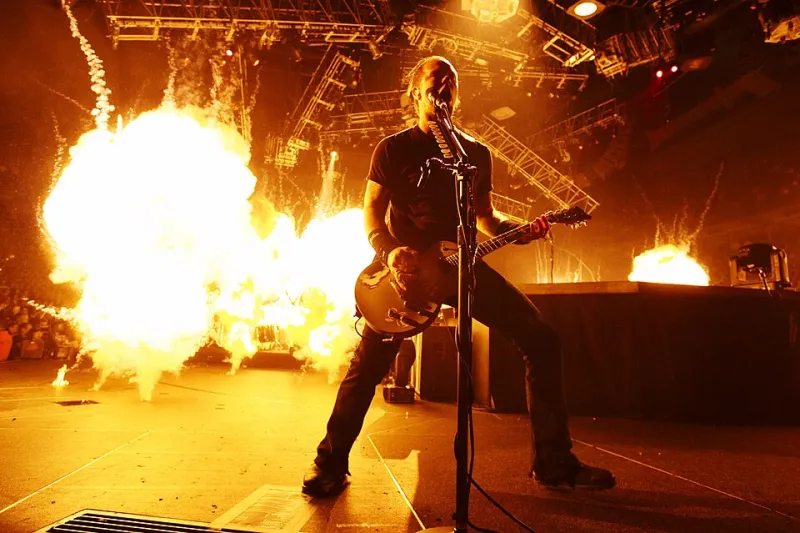
So you book the route. You drive the miles. You let the weight of the place do what it's going to do to you. And then—if you're lucky, if you're honest—you walk out on that stage and play something that couldn't have existed anywhere else.
That's not selling your soul at the crossroads. That's just what happens when the road meets the song.