Six Dollars and a Story: What Touring Musicians Really Discover at the Merch Table
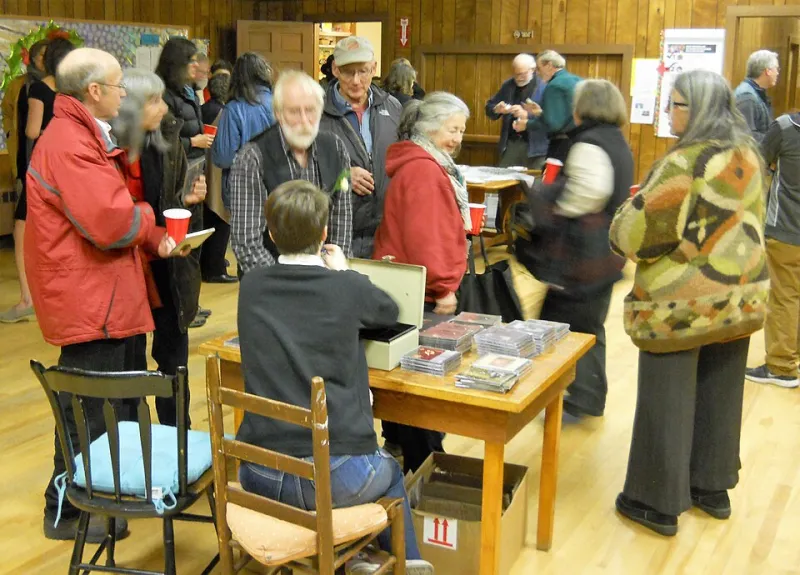
Photo: Artaxerxes, CC BY-SA 4.0, via Wikimedia Commons
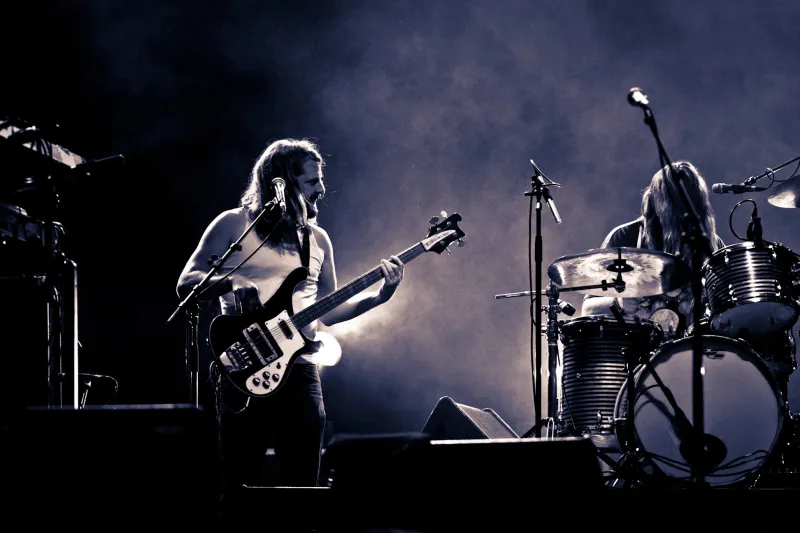
The set is done. The amp is cooling off. Somewhere behind the stage, a guitar is getting zipped into its case. But for a lot of touring Americana artists, the real work — the kind that doesn't show up on any setlist — begins right around the time they plant themselves behind a folding table covered in cardboard price tags and stacked merch bins.
The post-show merch table has always been part economics and part obligation. You sell some CDs, maybe move a few tees, cover a tank of gas for the next leg of the drive. But talk to enough touring musicians about what actually happens during those thirty or forty minutes, and a different picture starts to emerge. Something closer to fieldwork. Something that feels, in retrospect, like the most honest conversation they had all night.
The Table as a Two-Way Mirror
There's a particular kind of openness that settles over a crowd after a good show. The music has done its job — loosened something up, cracked a few walls. And when a fan walks up to the merch table and finds the actual person who wrote the song standing right there, holding a Sharpie and asking their name, the conversation that follows can go places that almost nothing else does.
Singer-songwriter types who've been grinding the touring circuit for years will tell you that the merch table is where they learned what their songs actually meant to people. Not what they intended — what the listener received. A song about a grandmother's kitchen in rural Mississippi becomes, in the retelling of a stranger from central Ohio, a song about their own grandfather's garage. A tune written about heartbreak on a Texas highway gets claimed by a woman in Vermont who says it's about her divorce. The table is where the songwriter's private meaning goes public, and the exchange is never what you expect.
Regional Confessions, One Town at a Time
One of the quieter revelations that touring musicians mention is how distinctly the conversations change from region to region. The Midwest crowd tends to linger. They want to talk about the drive they took to get here, the town two counties over where they grew up, the barn that used to host dances before the highway bypassed everything. The South brings its own particular warmth — a kind of conversational generosity that pulls you into family stories before you've even finished signing the album cover.
In the Pacific Northwest, fans are more likely to talk about the craft — tuning choices, recording techniques, where you laid the tracks down. In Appalachia, the conversation often circles back to lineage. Who taught you? Who do you sound like? Do you know so-and-so who plays over in the next holler?
These aren't just pleasant small-talk patterns. For songwriters paying attention, they're a map. They tell you what a community values, what it mourns, what it's proud of, and what it's quietly carrying. That's material. That's the kind of texture that you can't manufacture in a studio or research on the internet.
The Stories That Follow You Home
Ask a touring Americana artist about their strangest or most memorable merch table encounter, and odds are they don't have to think very long. These moments have a way of sticking.
There's the retired coal miner in eastern Kentucky who waited until everyone else had cleared out to hand over a folded piece of paper — a poem he'd written in the parking lot after the show, pressed between a twenty and a request that it never be read aloud. There's the teenage girl in rural Nebraska who bought the last copy of an EP and then stood there for ten minutes explaining that it was the first live music she'd ever seen, because her town didn't have a venue and her parents drove two hours to bring her here. There's the Vietnam vet in rural Georgia who just wanted to shake hands and say that one specific song had been playing on repeat since his wife passed.
None of these people show up in album liner notes. But their fingerprints are all over the music that gets written after the tour ends.
Setlists Written in Real Time
The feedback loop between the merch table and the stage is faster than most people realize. Touring musicians are constantly adjusting — not just their setlists, but the stories they tell between songs, the way they introduce a tune, the regional references they lean into or leave out.
When someone at the merch table in Tulsa tells you that the song you played third was the one that made their whole table cry, you put it earlier in the set next time. When a cluster of fans in Asheville keep asking about a deep cut you haven't played in months, it finds its way back in. The table is a feedback mechanism that no streaming algorithm can replicate, because it comes with eye contact and context.
Some artists have started keeping informal notes after shows — not for any official purpose, just a running log of what people said, what they asked about, what they were going through. Over the course of a long tour, those notes start to read like a cross-section of American life. Job losses and new babies. Divorces and road trips. Graduations and funerals. The full, unglamorous sweep of it.
Why the Table Still Matters in the Streaming Age
In an era when music discovery happens mostly through playlists and algorithms, the merch table is one of the last genuinely analog points of contact between an artist and the people who actually listen. You can't swipe past it. You can't skip it. You have to show up, look someone in the eye, and be present for whatever they bring to you.
For Americana and roots music especially — genres that have always drawn their strength from community and place — that face-to-face moment carries real weight. It's a reminder that the songs aren't floating in some digital cloud. They're landing somewhere specific, in specific lives, in specific towns with specific histories.
The road will always be where the songs start. But the merch table, it turns out, is where they finish — handed back to the artist in the form of stories they never could have written alone.
So next time you're at a show and the last chord rings out, maybe don't rush for the door. Walk up to that table, buy something if you can, and tell the person behind it what the music meant to you tonight. Chances are, you'll end up in a song.