Off the Beaten Setlist: The Unlikely Touring Circuits That Rewrote the Rules for Americana
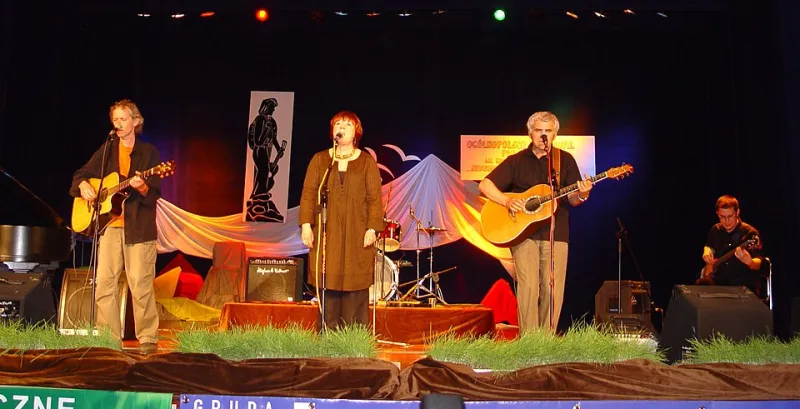
Photo: This image is a work by Wikipedia and Wikimedia Commons user Jarosław Kruk (Jrkruk). When reusing, please credit me as author: Jarosław Roland Kruk / Wikipedia, licence: CC-BY-SA-3.0 If you use my image on your website, please send me an emai
Conventional wisdom in the music industry has always had a pretty clear picture of what a successful Americana tour looks like: anchor cities, mid-size venues with decent guarantees, maybe a festival slot or two to justify the miles. You hit Austin, you hit Nashville, you work your way through a string of college towns with good radio stations, and you call that a tour.
A growing number of artists and promoters have decided that conventional wisdom is overrated.
Across the country, unconventional touring circuits are not just surviving — they're thriving. Routes that run through rusted-out industrial spaces in Youngstown, community centers in the Missouri Ozarks, and library basements in rural Vermont are drawing devoted audiences and generating the kind of artist loyalty that the traditional industry infrastructure rarely produces. The people building these circuits didn't inherit a playbook. They wrote one from scratch.
The Rust Belt Reclamation
Drive through places like Johnstown, Pennsylvania, or Gary, Indiana, and you'll find buildings that used to mean something — old manufacturing spaces, union halls, warehouses that once moved goods through the industrial heartland. A lot of them are still standing, still structurally sound, and increasingly, still hosting live music.
Promoter and community organizer Deb Zawadzki has spent the last several years converting underused industrial spaces in western Pennsylvania into temporary music venues. Her operation, which she runs out of a converted print shop in Altoona, doesn't have a formal name or a website. It runs almost entirely on word of mouth, email lists, and the goodwill of building owners who'd rather see their spaces used than sitting empty.
"These towns have incredible bones," she says. "The infrastructure is there. The community is there. What was missing was somebody willing to take a chance on treating them like a real music destination instead of a place you drive through to get somewhere else."
The artists she books — mostly Americana, folk, and country-adjacent acts with regional followings — often report that Rust Belt audiences are among the most engaged they encounter anywhere on the road. There's a hunger for live music in communities that haven't been treated as viable markets, and it shows up in the room.
"I played a show in a former machine shop outside Scranton last spring," says folk singer-songwriter Joel Tarrant. "I thought maybe forty people would show up. There were over two hundred. I didn't even have merch to sell them."
Rural Routes and the Community Center Revival
If the Rust Belt circuit runs on industrial nostalgia, the rural community center circuit runs on something older: the idea that small towns deserve real culture, not just the occasional touring act that stumbles through on the way to somewhere bigger.
In states like Missouri, Arkansas, and rural Kentucky, a loose network of community centers, VFW halls, and agricultural fairgrounds has emerged as a legitimate touring infrastructure for roots musicians willing to accept modest guarantees in exchange for something harder to quantify — genuine connection with audiences who show up because they actually care.
The math doesn't always look great on paper. A community center in the Ozarks might cap at 150 people and offer a door split that works out to a few hundred dollars on a good night. But artists who've worked these rooms consistently describe something the bigger venues don't offer: a crowd where every single person chose to be there.
Sisters Lena and Priya Caldwell, who tour as the duo Cottonwood Line, built their first real touring circuit almost entirely through rural Missouri and southern Illinois community spaces. They didn't have a booking agent. They had a spreadsheet, a reliable van, and a willingness to drive two hours between shows.
"People told us we were crazy," Lena Caldwell says. "But those shows built our fanbase. Those people came back. They told their friends. Three years later, we're selling out 500-seat rooms in St. Louis, and we got there because we spent two years playing rooms that seated eighty."
The Nonprofit Partnership Model
Perhaps the most genuinely unexpected development in the underdog touring circuit world is the emergence of nonprofit partnerships as a structural backbone for roots music touring.
Some artists have figured out that local nonprofits — arts organizations, food banks, historical preservation societies, rural development groups — often have exactly what a touring musician needs: community trust, existing mailing lists, access to spaces, and a built-in audience that already shows up for events. The musician brings the draw. The nonprofit brings the infrastructure.
The arrangement works differently in every community, but the core exchange is consistent. The show drives ticket revenue and awareness for the nonprofit's mission. The musician gets a vetted local partner, reduced overhead, and a ready-made audience that might never have found them through traditional music discovery channels.
Guitarist and bandleader Ray Okafor has spent the last two years building a touring circuit through rural Appalachia using exactly this model, partnering with small arts nonprofits and community development organizations in eastern Kentucky and southwestern Virginia. His booking process looks nothing like a traditional tour: instead of contacting venues, he contacts mission-driven organizations and asks if they'd be interested in co-presenting a show.
"The response rate is wild," he says. "Because it's a different conversation. It's not 'can you pay my guarantee.' It's 'let's do something together that matters to your community.' That changes everything about how the night feels."
What Makes These Circuits Work
For all their differences in geography and format, the successful underdog circuits share a few consistent traits. They prioritize relationship-building over transaction. They treat audiences in smaller markets with the same respect given to bigger ones. And they accept that the metrics of success might not look like traditional touring numbers.
They also tend to produce something that's increasingly rare in a streaming-dominated music landscape: fans who feel genuinely invested in an artist's career. When you've seen someone play a converted warehouse in Youngstown or a community center in the Ozarks, you're not just a passive listener anymore. You're part of a story.
Deb Zawadzki in Altoona puts it plainly: "The music industry spent decades telling certain places they didn't matter. The artists who figured out that wasn't true — they're the ones building something real."
The road to a sustainable Americana career has never run exclusively through the expected cities. It's always been out there on the back highways, winding through the towns that get skipped on the standard tour routing. The artists who've figured that out aren't just surviving. They're building something that might actually last.
And they're doing it one unexpected venue at a time.