The Songs Nobody Plays on the Radio (And Why Crowds Go Wildest for Them)

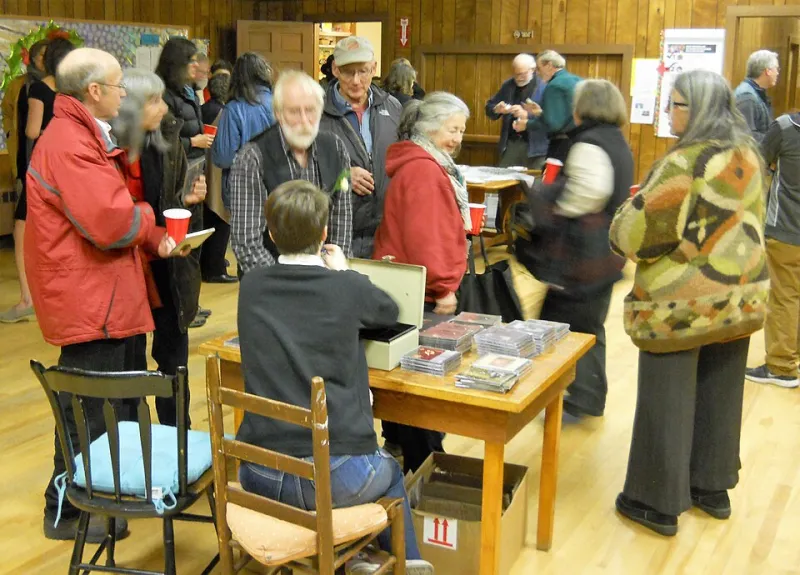
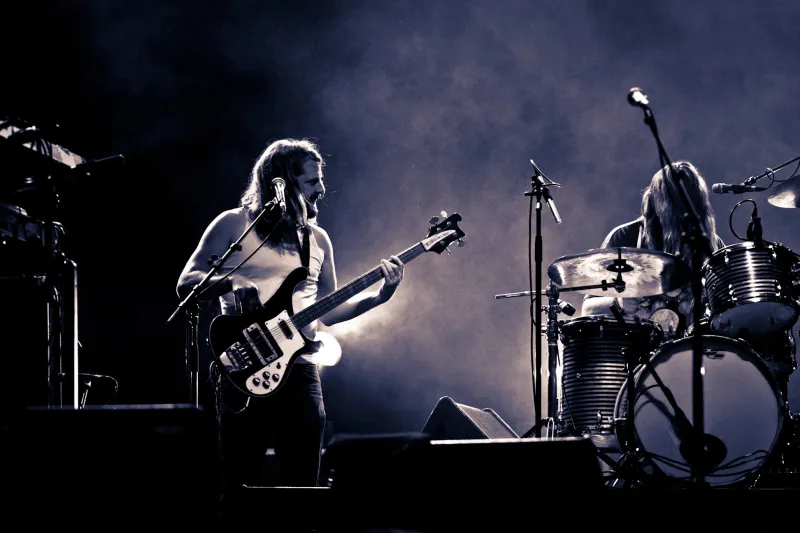
Photo: Suyash Dwivedi, CC BY-SA 4.0, via Wikimedia Commons
There's a particular kind of silence that settles over a small venue when a song hits exactly right. Not polite silence — the kind that follows a performer's cue — but the involuntary, held-breath kind. The kind where someone in the third row forgets they're holding a beer. Touring musicians know that silence. And more often than not, they'll tell you it doesn't happen during the singles.
It happens during the deep cuts.
The Song That Lived in Track Eight
Asheville-based songwriter Delia Crane spent two years playing the same eleven-song set before a booker in Knoxville asked her to stretch to ninety minutes. Forced to dig into her catalog, she dusted off a track from her second album — a slow, fiddle-heavy piece about her grandmother's farmhouse in eastern Kentucky that she'd quietly assumed nobody cared about.
"I almost didn't play it," she says. "I figured people came to hear the stuff from the new record. But I needed the time, so I threw it in toward the end."
The response floored her. Three people came up after the show specifically to ask about that song. One woman had tears on her face. Another told Crane it was the first time a song had ever made her feel like her own family's story was worth something.
"That track never got a single mention in any review," Crane says. "Not one. And it's the song people ask for now."
This is the strange alchemy that the touring circuit performs on a musician's catalog. Songs that seemed too quiet, too regional, too specific, or just too weird for mainstream consumption find their people — one room at a time, one honest crowd at a time.
What the Charts Don't Measure
Commercial metrics do a lousy job of capturing what actually moves people. Streaming counts, radio adds, playlist placements — these numbers describe reach, not resonance. A song can rack up a hundred thousand plays from passive listeners and never once make someone feel genuinely understood. Meanwhile, a track buried on side two of a vinyl pressing can walk into a listening room in Iowa City and wreck everyone in the building.
That disconnect is something the Americana and folk world understands better than most genres. The circuit — the house concerts, the arts centers, the festival side stages, the back-room bars — is built on intimacy. And intimacy has a way of surfacing exactly what's real.
Virginia-born guitarist Marcus Tully puts it plainly: "The road has a way of sorting your songs for you. You think you know which ones matter. You don't. The audience knows."
Tully spent the better part of a decade leading with his most accessible material before a stretch of solo dates in the upper Midwest changed his thinking. Playing smaller rooms without a full band, he found himself reaching for songs he'd written in a different headspace — longer, stranger, less concerned with hooks. The crowds didn't just accept them. They leaned in.
"There's something about a room with sixty people in it," he says. "They're not passively consuming. They're actually listening. And when you play something that feels like it was written for no one in particular, those are exactly the people who feel like it was written specifically for them."
Unexpected Requests and the Geography of a Catalog
One of the stranger pleasures of extended touring is discovering which songs travel well and which ones belong to a specific geography. Folk and roots musicians often find that certain deep cuts resonate differently depending on where they're playing — a song about flooding rivers hits differently in the Mississippi Delta than it does in Vermont; a track about factory closures finds a quieter, heavier audience in the Rust Belt.
Singer-songwriter Petra Hollis, who tours primarily through the South and Appalachian corridor, keeps a running list of the songs that get requested in specific towns. "I have this one track — it's barely three minutes, very stripped down, about driving through a town that used to have a mill," she says. "In certain places, people will come up before the show and ask if I'm going to play it. They heard it from someone else who saw me play. It just passes person to person, town to town."
That word-of-mouth life is something the digital age hasn't quite replicated. A song can travel through a region the same way a rumor does — quietly, personally, carried by people who felt something and wanted someone else to feel it too.
The Courage to Trust the Catalog
For many touring musicians, the bigger challenge isn't identifying which deep cuts resonate — it's giving themselves permission to play them consistently. There's a persistent anxiety that audiences came for the recognizable stuff, that pulling out something obscure is somehow a breach of contract.
Delia Crane spent a long time feeling that way. "I used to think the setlist was a kind of promise," she says. "Like, you came to hear the songs you know, and I owe you those songs." The road eventually cured her of that thinking. "Now I feel like the promise is honesty. Play what's true. Trust that someone in the room needs exactly that."
Marcus Tully agrees, though he frames it differently. "Your B-sides aren't lesser songs. They're just songs that haven't found their audience yet. The touring circuit is where that happens. You're not playing for the algorithm. You're playing for the person in the fourth row who drove forty-five minutes to be there."
What the Road Teaches
The touring life is relentless and unglamorous in ways that the mythology of Americana music tends to romanticize. Long drives, short sleeps, inconsistent pay — none of that is particularly poetic when you're living it. But the road does offer something that no amount of studio time or marketing strategy can manufacture: an unfiltered education in what your own music actually is.
Every night is a small experiment. Every setlist is a hypothesis. And over hundreds of shows, played in listening rooms and festival tents and converted church halls from Georgia to Oregon, a musician starts to understand their catalog in a way no critic, no label rep, and no streaming dashboard could ever explain.
The songs that survive that education — the ones that keep getting played, keep getting requested, keep making someone in the crowd go still — those are the ones worth knowing. And more often than not, they're the ones that almost didn't make the cut.
The B-side, it turns out, is where the truth tends to hide.